Country Description
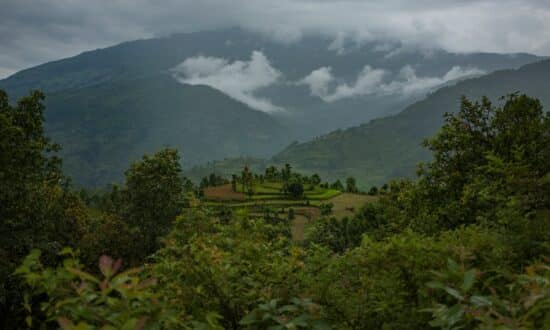
Syria, officially known as the Syrian Arab Republic, is located in the Middle East and borders Turkey, Iraq, Jordan, Israel, and Lebanon. The country has a diverse landscape that includes arid desert plateaus, narrow coastal plains, and mountain ranges in the west. Syria has a predominantly semi-arid to arid climate, characterized by limited water resources and frequent droughts. Summers are typically hot and dry, while winters along the coast are milder and receive most of the country’s rainfall. Inland regions, including the capital Damascus, occasionally experience snowfall.
Rainfall varies significantly across the country, ranging from about 1,365 mm annually in the coastal mountains to as little as 20 mm in the southeastern desert (Climate Change Knowledge Portal). Most of Syria’s land is arid, and natural forests cover only around 2 percent of the country’s total area. Water scarcity is a major concern, with agriculture accounting for approximately 88 percent of freshwater use (IFRC).
Syria has already experienced rising temperatures, with an increase of approximately 0.8°C over the past century. Climate projections indicate a further rise of 1–3°C by 2050 depending on greenhouse gas emission scenarios. This warming trend is expected to intensify heatwaves, prolong drought periods, and further strain water resources. The ND-GAIN Country Index ranks Syria 158th globally, identifying it as the 114th most vulnerable and the 185th least ready country to address climate change impacts.
In addition to climate risks, Syria continues to face ongoing conflict, financial constraints, and extensive infrastructure damage, which complicate the implementation of climate policies. Nevertheless, the country submitted its NDC in 2018, outlining actions to reduce greenhouse gas emissions by 20 percent by 2030 through renewable energy expansion, improved energy efficiency, reforestation, and better waste management, alongside adaptation measures in water conservation, agriculture, disaster risk reduction, and coastal protection.