Sustainable Energy

Sustainable Energy

Energy is considered sustainable if it meets the needs of the present without compromising the needs of future generations.  

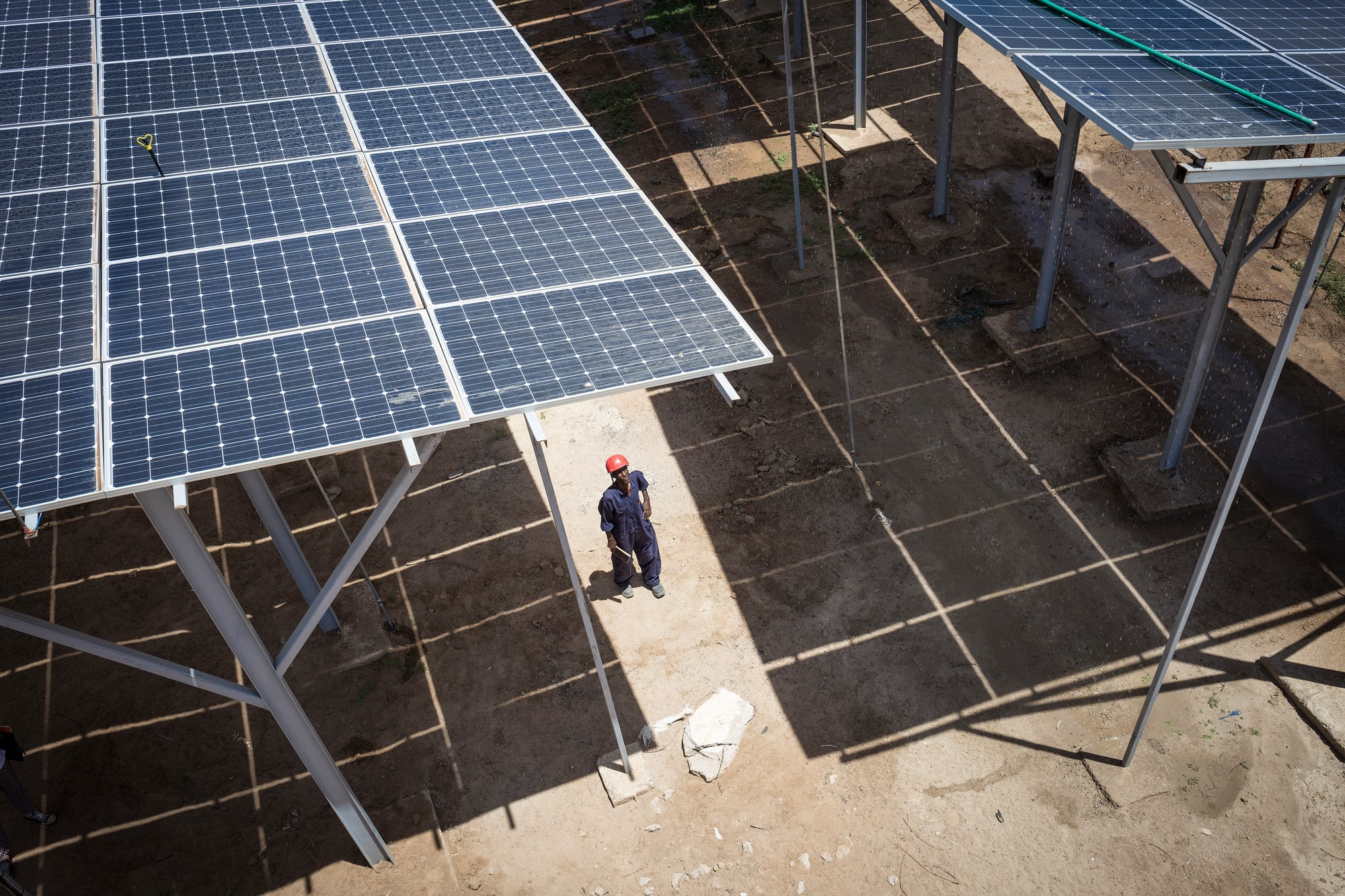
As CARE, we aim to focus on renewable energy sources only, as these sources are constantly replenished, such as those derived organically or that are naturally recycled. Solar, wind, geothermal, hydropower, and biomass are all renewable, as opposed to fossil fuels or uranium, which take much longer to create.  

Sri Lanka

Country Description

Sri Lanka is a small island nation in the Indian Ocean, with a warm and humid climate influenced by its geographical position between 6°N and 10°N latitude. The country has four distinct climate seasons: the two monsoons—the southwest monsoon (Yala) from May to October and the northeast monsoon (Maha) from December to Marchas well as two inter-monsoonal periods. The southwest monsoon brings heavy rainfall to the western, southern, and central highlands, while the northeast monsoon affects the northern and eastern regions (Climate Change Knowledge Portal). Average annual temperatures range between 28°C and 30°C in coastal areas and can drop to around 15°C in the central highlands. However, due to climate change, Sri Lanka is experiencing increasing temperatures, with projections indicating a rise of up to 3.5°C by 2100 under high-emission scenarios (World Bank Group). 

AdditionallySri Lanka is highly vulnerable to extreme weather events such as floods, droughts, landslides, and cyclones, which have intensified in recent decadesSri Lanka experiences significant spatial and temporal variations in droughts and floods. Climate change is intensifying these challenges by increasing rainfall variability and extreme temperatures, leading to new risks such as salinity intrusion, coastal erosion, and sea level rise. The rising frequency and intensity of climate-induced disasters pose a growing threat to the country’s socioeconomic development. (Asian Development Bank).  

In response, Sri Lanka has developed various adaptation and mitigation strategies, including commitments under its NDC (2021to the Paris Agreement. These efforts focus on enhancing disaster resilience, promoting sustainable agriculture, improving water resource management, and transitioning to renewable energy sources.  

Climate Justice project
3
Closed Climate Justice project
3
People directly reached via Climate Justice project in FY24
9,079
Senegal

Country Description

Senegal is a country that is vulnerable to the impacts of climate change from drought, locust invasion, flooding and related health epidemics, sea-level rise, coastal erosion and its corollaries, and bush fire (World Bank Climate Change Knowledge Portal). The country is considered highly vulnerable to recurring environmental shocks, with droughts and floods having intensified in recent years, and climate change is expected to further increase the extremes of weather patterns and natural hazards putting vulnerable populations such as the 50.8 percent of the population (8,579 thousand people in 2021) considered as multidimensionally poor, while an additional 18.2 percent is classified as vulnerable to multidimensional poverty (3,069 thousand people in 2021) (2023 Multidimensional Poverty index, UNDP). The adverse effects of the climate crisis disproportionately affect the poormainly through decreased agricultural productivity, increased food prices, coastal flooding and erosion, and associated health hazards, with female-headed households more economically vulnerable to even modest levels of climate change (World Bank Group Systematic Country Diagnostic of Senegal).

Climate Justice project
1
Closed Climate Justice project
1
People directly reached via Climate Justice project in FY24
205
Barbados

Country Description

Barbados, a small island nation within the Carribean region considered is highly vulnerable to the impacts of climate change. The country is vulnerable to hurricanes and natural hazards and is particularly susceptible to coastal inundation and sea level rise, which increase tidal and storm surge levels, coastal erosion, increasing temperatures, changes in rainfall patterns, cyclones, and droughts among others (World Bank Climate Change Knowledge Portal).

Barbados has also been noted as a country at the forefront of reforming the world of development finance, particularly how rich countries help poor countries cope with and adapt to climate change, through movements like the Bridgetown Initiative. (World Economic Forum)

Climate Justice project
1
Closed Climate Justice project
1
Philippines

Country Description

Located in the heart of Southeast Asia, the Philippines is found near the equator and within the Pacific Ring of Fire. Because of this geographic location, the Philippines is counted as one of the most vulnerable countries to various hydrometeorological disasters and ranks first among 193 countries assessed for disaster risk (World Risk Index 2024).  


With the effects of the climate crisis, low-lying coastal communities are threatened by rising sea levels, while increasingly intense typhoons averaging at about 20 per year (Philippine Atmospheric, Geophysical and Astronomical Services Administration) bring devastating floods and landslides. Moreover, prolonged droughts and erratic rainfall patterns disrupt agriculture, water resources, and access to basic services. These climate impacts disproportionately affect marginalized communities, exacerbating poverty, increasing gender-based violence, and overall inequality. Complex and ever-changing socioeconomic conditions also make the country particularly susceptible to the intensifying effects of climate change. 

Climate Justice project
12
Active Climate Justice project
8
Closed Climate Justice project
4
People directly reached via Climate Justice project in FY24
40,173
People impacted via CJ project since 2021
11,799
Bangladesh

Country Description

Bangladesh has a humid, warm climate influenced by pre-monsoon, monsoon and post-monsoon circulations and frequently experiences heavy precipitation and tropical cyclones (World Bank Climate Change Knowledge Portal). In the World Risk Report, Bangladesh is 9th among 193 countries assessed for disaster risk (World Risk Index 2023). 

In rural areas, where nearly 80 percent of the population live, climate change has an immediate and direct effect on the health and wellbeing of millions of people who depend on natural resources for their livelihoods. The impacts of climate change are also increasingly felt in large cities that are exposed to various climate-induced hazards, including variations in temperature, excessive and erratic rainfall, water logging, flooding, and heat and cold waves (Bangladesh: Finding It Difficult to Keep Cool as cited in Rabbani et al, 2011). 

Climate Justice project
18
Active Climate Justice project
12
Closed Climate Justice project
6
People directly reached via Climate Justice project in FY24
976,027
People impacted via CJ project since 2021
1,413,001
Honduras

Country Description

Honduras is a country in Central America, bordered by the Caribbean to the east and the Pacific to the west. Honduras’s climate is hot and tropical in the coastal lowlands and more temperate in the highlands. Forest takes up 41% of the country’s land followed by 27% that is agricultural (World Bank Group, 2021). 82% of the country is mountainous (ibid.). 50% of Honduras’s population lives in rural areas – of which 65% live in poverty – and depend on rainfed agriculture (World Bank Group, 2023). Honduras is highly vulnerable to the effects of climate change due to its high exposure to climate-related hazards (e.g., hurricanes, drought, tropical storms, floods) (ibid.). 

Temperatures are projected to increase by 1-2.5°C by 2050 and extreme rainfall and flood events are expected to become more frequent, along with a reduction in rainfall and an increase in droughts (GRID Geneva, n.d.). This is expected to have a negative effect on hydropower production which currently generates almost 40% of Honduras’s energy as well as on freshwater availability and quality (particularly in the Dry Corridor) (ibid.). Climactic changes are also expected to increase the spread of vector- and waterborne diseases, worsen food insecurity, and higher yield losses due to drought and disease. As temperatures rise, coffee (the main agricultural export) farmers will need to move to higher elevations increasing land degradation (ibid.). Severe climate change effects along with mining, deforestation, and agro-industry has severely threatened livelihoods and human rights, pushing many in poorer communities in Honduras to flee the country (UN, 2023). 

The DNCC (Honduras Climate Change National Office) is responsible for delivering national-level action on adaptation. Honduras’s Country Vision and National Plan (2010) aims to focus on sustainable development whilst minimizing environmental vulnerability and climactic threats. According to GRID Geneva (n.d.) Honduras has made progress in setting up a policy and regulatory framework for addressing climate change but many are yet to be implemented. 

Climate Justice project
3
Active Climate Justice project
2
Closed Climate Justice project
1
People directly reached via Climate Justice project in FY24
6,767
Syria

Country Description

Syria, officially known as the Syrian Arab Republic, is located in the Middle East, bordering Turkey, Iraq, Jordan, Israel, and Lebanon. The country has a diverse landscape, including arid desert plateaus, narrow coastal plains and mountains in the west. Syria has a predominantly semi-arid to arid climate, with limited water resources and frequent droughts. Syria experiences a hot, dry desert climate, with sunny summers (June–August) and mild, rainy winters along the coast (December–February). Inland regions, including the capital Damascus, occasionally experience snowfall.  

Rainfall varies significantly across regions, with annual precipitation ranging from 1,365 mm in the coastal mountains to as little as 20 mm in the southeastern desert (Climate Change Knowledge Portal). The majority of Syria’s land is arid, with natural forests covering only about 2% of the total area. Water shortages are a major concern, with agriculture consuming approximately 88% of the country’s freshwater supply (IFRC). 

Syria has already experienced rising temperatures, with an increase of approximately 0.8°C per century. Future projections indicate a further rise of 1–3°C by 2050, depending on greenhouse gas emission scenarios. This warming trend is expected to intensify heatwaves, prolong drought periods, and increase water scarcity. The ND-GAIN Country Index ranks Syria 158th globally, identifying it as the 114th most vulnerable and 185th least ready country.  

Other than climate risks, Syria also faces ongoing conflict, financial constraints, and infrastructure damage. Therefore, the efforts on implementing climate policies have been challenging. However, the country submitted their NDC (2018), outlining key actions on reducing GHG emissions by 20% by 2030 through renewable energy expansion, energy efficiency, reforestation, and improved waste management, together with enhancing climate adaptation in water conservation, agriculture, disaster risk reduction, and coastal protection. 

Climate Justice project
2
Active Climate Justice project
1
Closed Climate Justice project
1
People directly reached via Climate Justice project in FY24
676
Niger

Country Description

Niger is a landlocked country in Western Africa, belonging to the Sahel region. Characterized by its location within the said region, the country is exposed to a hot and dry climate with significant variability in rainfall. The said region, encompassing around 80% of the Niger’s land area, has a high dependence on rain-fed agriculture and its natural resources to support food security and livelihoods, rapid population growth, and chronic humanitarian crises due to recurrent drought, flooding, food insecurity, epidemics, and violent conflict. The country has shown history of droughts and flooding.” (Climate Change Knowledge Portal). According to the Federal Ministry for Economic Cooperation and Development, temperature in Niger is projected to rise by between 2.0 and 4.6 °C by 2080, compared to pre-industrial levels, with higher temperatures and more temperature extremes projected for the south-west of Niger.  
 
Given these compounding factors, climate change will likely exacerbate existing vulnerabilities in the country. Water scarcity, longer dry seasons and impacts of higher temperatures may trigger new conflict and forced migration, issues that already impact the region. (USAID Climate Risk Profile, 2017).

Climate Justice project
17
Active Climate Justice project
11
Closed Climate Justice project
6
People directly reached via Climate Justice project in FY24
1,045,120
People impacted via CJ project since 2021
329,209
Tanzania

Country Description

Tanzania is the largest country in east Africa with a coastline along the Indian Ocean. Tanzania is predominantly a highland area sitting 900-1800m above sea level with mountains ranges throughout, except by the coast where it is flatter. Tanzania’s climate is largely driven by altitude, with tropical lowlands in the east to colder highlands in the north and southwest. It is vulnerable to the effects of climate change in public health, energy supply, infrastructure, water resources, and agriculture (World Bank Group, n.d.). Climate change is expected to exacerbate the risks from extreme weather events such as variation in rainfall and frequent and prolonged droughts and floods (ibid.). 

Air temperature in Tanzania is expected to rise across all emission scenarios, with the annual number of very hot days projected to rise substantially with high certainty (GIZ, 2021). Sea level rise threatens communities along the coast and may cause saline intrusion, threatening water supply and biodiversity (ibid.). Projections on precipitation vary with some models projecting a large decrease (>42mm by 2080 compared to 2000) whilst others suggest almost no change (ibid.). However, heavy precipitation events are expected to become more intense (ibid.). Water availability is predicted to decline by 76% under both RCP2.6 and RCP6.0, though this is region-specific (ibid.). Changes in waterflows have impacted the country’s capacity to generate and supply electricity, particularly hydropower, which has been directly attributed to climate change driven droughts (United Republic of Tanzania, 2007). 

In its first NDC (2021) Tanzania outlines its adaptation measures in various sectors such as forestry (e.g. enhancing participatory sustainable forest management), coastal, marine environments and fisheries (e.g., promoting livelihood diversification for coastal communities), and energy (e.g., promoting climate-smart rural electrification). 

Climate Justice project
14
Active Climate Justice project
5
Closed Climate Justice project
9
People directly reached via Climate Justice project in FY24
26,526
People impacted via CJ project since 2021
164,681

EXPLORE

Other Themes

Donate for people and the planet

Help the CARE Climate and Resilience Academy share tools for change.

$
 
Personal Info

Credit Card Info
This is a secure SSL encrypted payment.

Donation Total: $25 One Time

This site is protected by reCAPTCHA and the Google Privacy Policy and Terms of Service apply.