


Who Decides? Why Pastoral Women’s Voices Matter in Climate Adaptation


As the world marks the International Year of Rangelands and Pastoralists (IYRP), recognition is growing of pastoralists’ vital role in sustaining livelihoods, food systems, biodiversity and critical ecosystems. Pastoralists have lived with uncertainty for generations. Moving livestock across landscapes in search of water and pasture is not a sign of vulnerability; it is a longstanding strategy for adapting to changing conditions.
Yet climate change is placing unprecedented pressure on these systems. Longer droughts, rising temperatures and more frequent shocks are making life increasingly difficult for pastoral communities across East Africa and beyond.
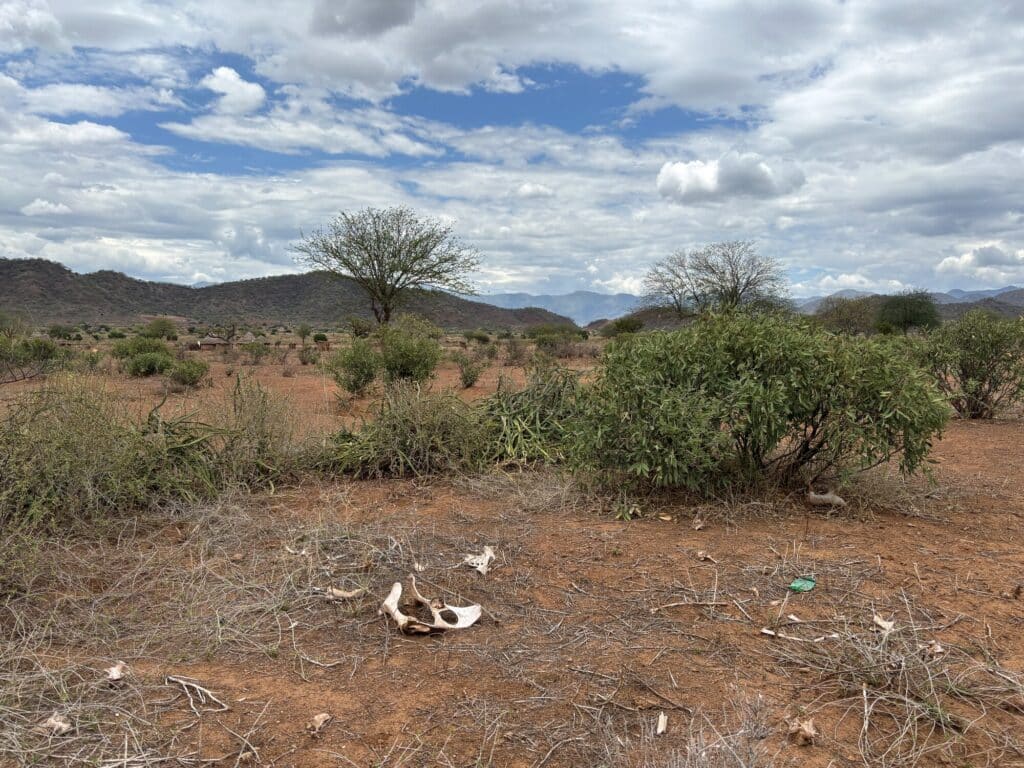
In Elwaye, southern Ethiopia, climate-induced droughts are driving longer, harsher dry seasons that threaten traditional livestock herding and the livelihoods of local pastoralists.
But climate change alone does not explain why some communities struggle more than others. Another part of the story is about decision-making; who has access to resources, whose voices are heard, and who shapes decisions about land, livelihoods, and adaptation.
As governments, donors and investors increasingly focus on climate resilience, a simple question matters: who decides, and who benefits?
Climate resilience is about more than weather
When drought hits, survival depends on more than rainfall or grazing conditions. It also depends on who has access to land and resources, how decisions are made, and whose voices are heard.
Across many pastoral regions, three barriers continue to shape who can adapt and who gets left behind:
- Weak and fragmented institutions
- Insecure rights to land and natural resources
- The exclusion of women from decision-making
Together, these factors shape who can adapt, who receives support, and who benefits from new opportunities such as climate finance.
When systems don’t match reality
Pastoral livelihoods depend on mobility. Families move livestock in response to changing conditions, following water and pasture across large landscapes.
This flexibility is one of pastoralism’s greatest strengths and has helped communities survive for generations in dry and unpredictable environments.
Yet many policies and support systems are designed for settled populations.
Social protection programmes, climate information services and veterinary services often struggle to reach mobile communities. Land governance systems may also fail to recognise shared grazing areas and migration routes, leaving them vulnerable to competing land uses.
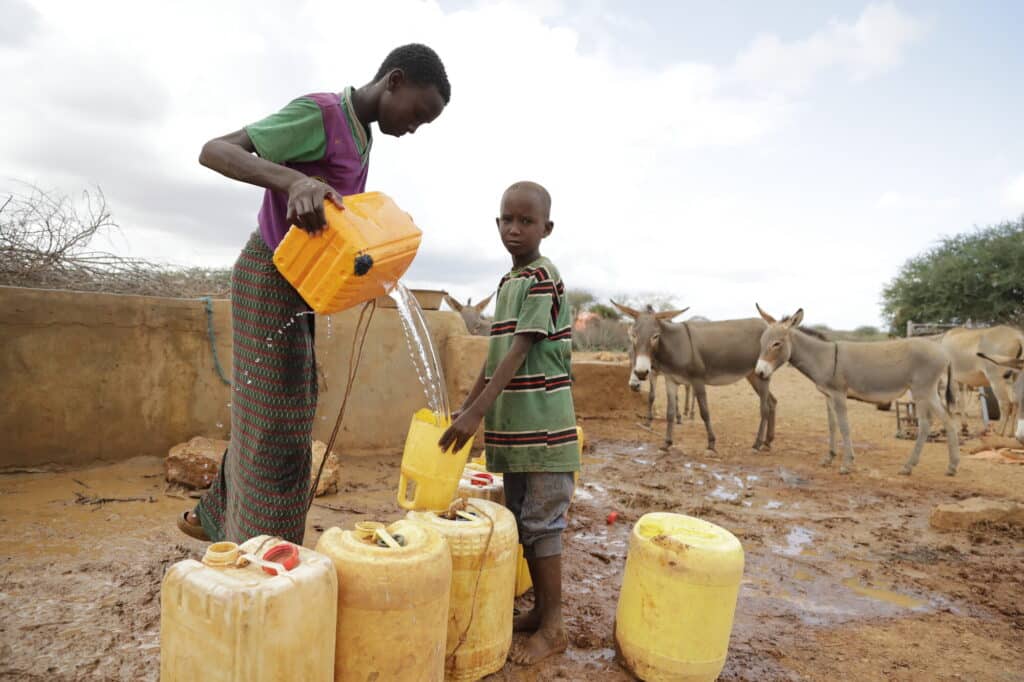
Zakaria and Ahad fetch water at a water point in Shangala village, Mandera County, a poor community whose main means of livelihood is pastoral.
When mobility becomes more difficult, one of pastoralists’ most effective adaptation strategies is weakened.
Even where good policies exist, implementation often falls short. National climate plans frequently fail to translate into meaningful local support due to weak coordination, limited data and inadequate engagement with pastoral communities.
Who decides? Mostly men
In many pastoral households, women are the backbone of daily life. They collect water, care for children and manage small livestock, often while navigating growing climate pressures.
Yet when key decisions are made about grazing routes, livestock sales, migration routes, or natural resource management, their voices are too often absent.
This gap comes at a cost. When drought deepens, livestock die, and food becomes scarce, women often carry the heaviest burden.
With fewer resources, less access to finance, and limited influence over decision-making, they are often less able to adapt and recover.
Climate impacts are not experienced equally
Climate shocks affect everyone, but not equally. As drought intensifies, women often travel further to collect water, spend more time caring for family members, and lose important sources of income linked to small livestock and dairy production.
In many households, small livestock and dairy provide essential income and a critical safety net. When these assets are lost, women’s economic security can disappear long before broader household losses are recognised.
The impacts extend beyond livelihoods.
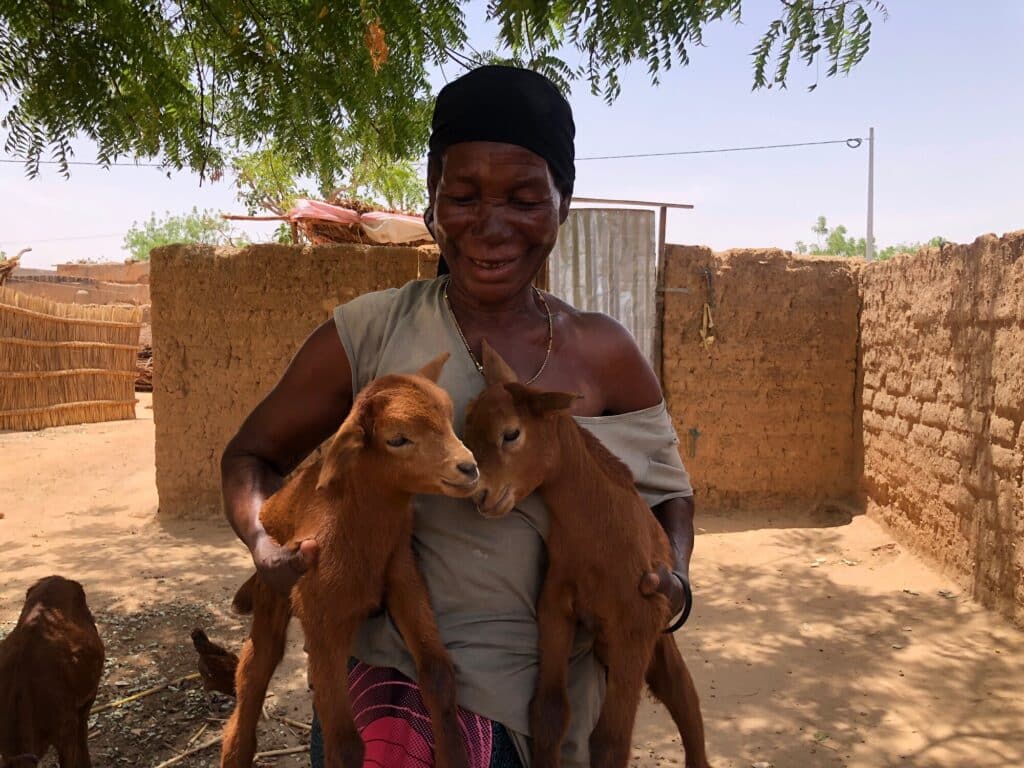
Mrs. SA’A, from the village of Kandusa, (Commune of Guidan Roumdji) and a member of the “Mata Masu Dubara (MMD)” group practicing the breeding of small ruminants (goats), holds up two for a photo.
Economic stress can increase pressure on families to withdraw girls from school, arrange early marriages, or adopt other harmful coping strategies.
At the same time, competition over scarce resources can fuel conflict and increase risks of violence against women and girls. These outcomes are not inevitable. They reflect systems that leave some people with fewer options and less support during crises.
Climate finance brings both opportunity and risk
Pastoral landscapes are attracting growing interest from climate investors, conservation initiatives, and carbon market programmes. This creates important opportunities.
Healthy rangelands can store carbon, support biodiversity and strengthen livelihoods. New investments could help communities build resilience while protecting ecosystems. But they also raise important questions: who controls the land, who participates in decisions, and who receives financial benefits?
Climate finance often relies on existing governance systems to distribute resources. In contexts where women are underrepresented, benefits can easily flow through the same structures that have historically excluded them.
Including women in consultations is not enough. If resources continue to be controlled through household heads or traditional leadership structures, financial benefits are likely to follow existing power dynamics. Climate finance can reduce inequality or reinforce it, depending on programme design.
Five shifts for a more resilient future
If adaptation investments are to deliver lasting benefits, they must address the systems that shape vulnerability. Five changes are particularly important:
1. Move from participation to influence
Women need meaningful influence over decisions about land, water, climate finance, and resource management.
2. Move from households to individuals
Tracking benefits at the household level often hides inequalities. Women should be able to access resources and opportunities directly.
3. Move from technical solutions to social change
Infrastructure matters, but so do the social norms that shape who can access it.
4. Strengthen inclusive resource governance
Pastoral systems depend on the collective management of resources. These systems must be more accountable and inclusive.
5. Connect livelihoods, protection, and resilience
Economic opportunities, safety, and voice are deeply connected.
A different vision of resilience
The International Year of Rangelands and Pastoralists offers an opportunity to rethink what resilience really means. Resilience is not simply about surviving the next drought. It means ensuring people have the resources and decision-making power to adapt and thrive. It means building institutions that work for pastoral communities, strengthening local governance and ensuring women have a meaningful voice in shaping decisions.
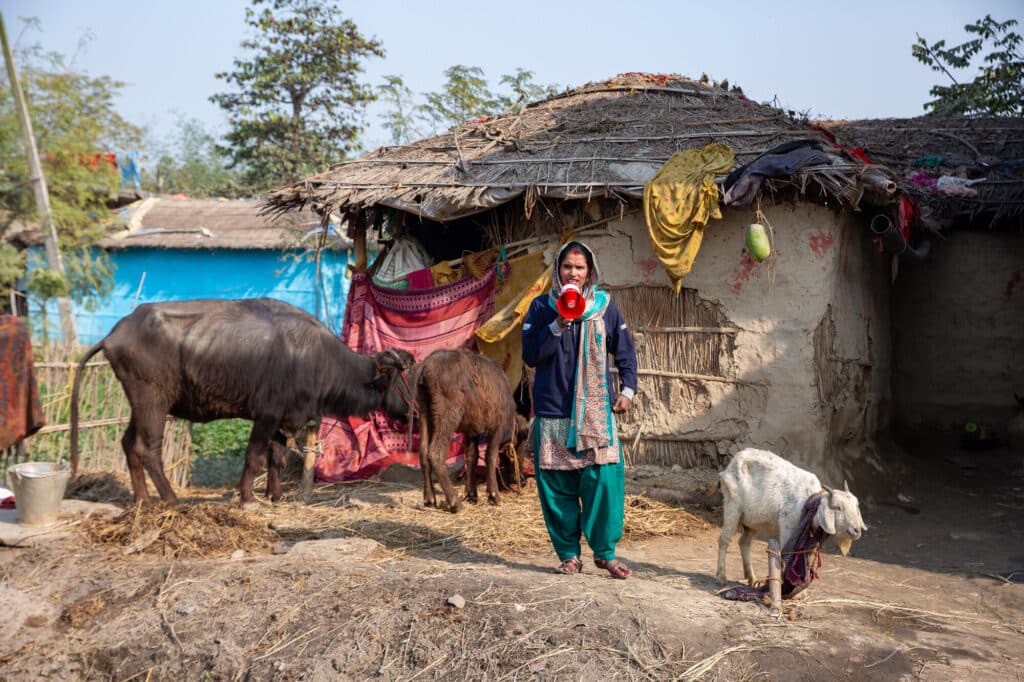
Binita from the Rajdevi Municipality, Gaur shares early flood warnings through CDMC, helping communities prepare and respond in time.
As climate finance, carbon markets and nature-based solutions expand across pastoral landscapes, these questions will only become more important. The future of pastoral adaptation will depend not only on how much investment reaches communities, but on who decides how it is used.
Resilience is ultimately about more than managing climate risk. It is about inclusion, fairness and ensuring that everyone, especially women and girls, can shape and benefit from the future being built around them.