


Advancing Gender-Responsive Climate Finance: Exploring Challenges and Practical Solutions


SB64 – Side event
CARE International, Practical Action, CGIAR, ILRI
Climate finance is not gender-neutral. Women and girls are often among those most affected by climate change, yet they receive only a tiny share of climate finance. At the same time, women-led organizations and local communities face significant barriers in accessing the resources needed to adapt and build resilience. Gender-responsive climate finance seeks to address this imbalance by ensuring that women and frontline communities can access funding, influence decisions, and lead climate action on equal terms.
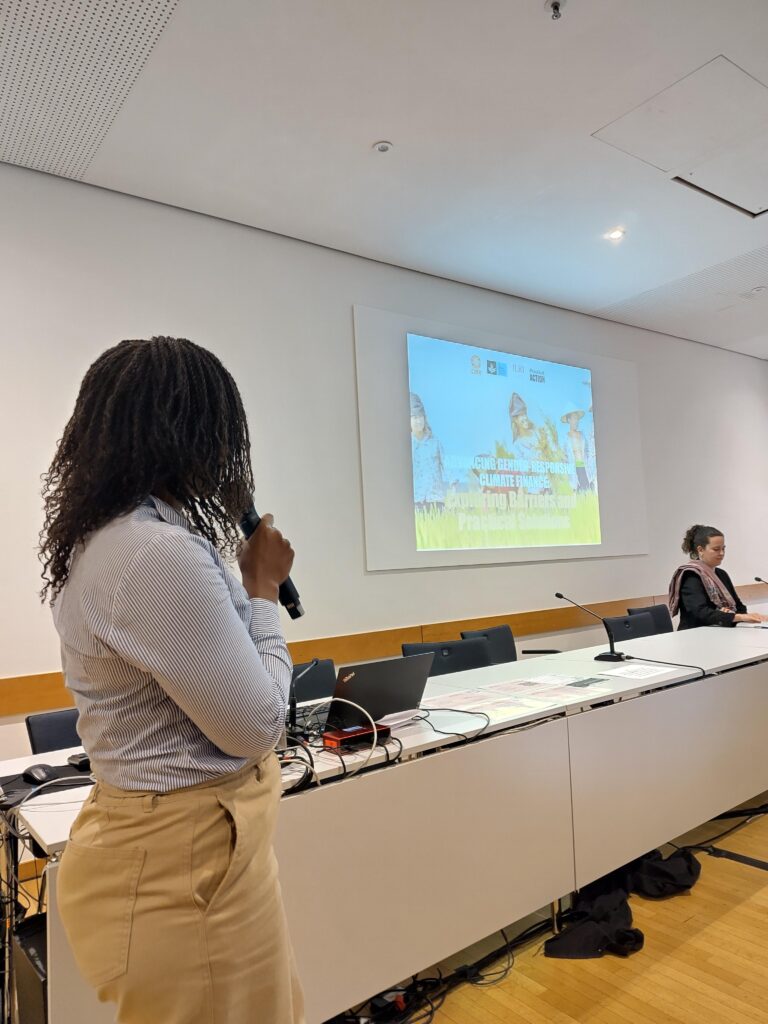
At an official side event during SB64 in Bonn, CARE International, Practical Action, CGIAR and the International Livestock Research Institute (ILRI) explored how climate finance can become more gender-responsive, accessible, and effective.
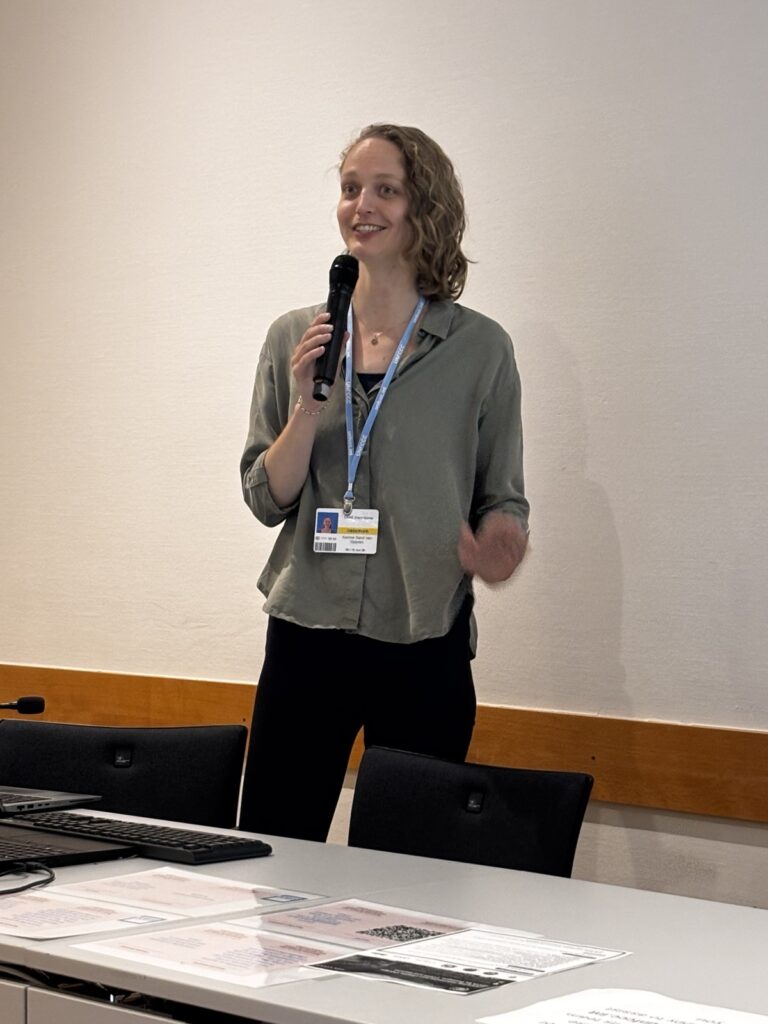
Wiebke Bender of the UNFCCC Gender Secretariat highlighted the importance of the newly adopted Belém Gender Action Plan, while CARE’s Kerime van Opijnen highlighted the findings of the research Centering Women in Climate Finance, developed by CARE Netherlands. The presentation underscored that locally led, feminist, and community-based climate solutions already exist at scale; the challenge lies in ensuring climate finance reaches and supports them.
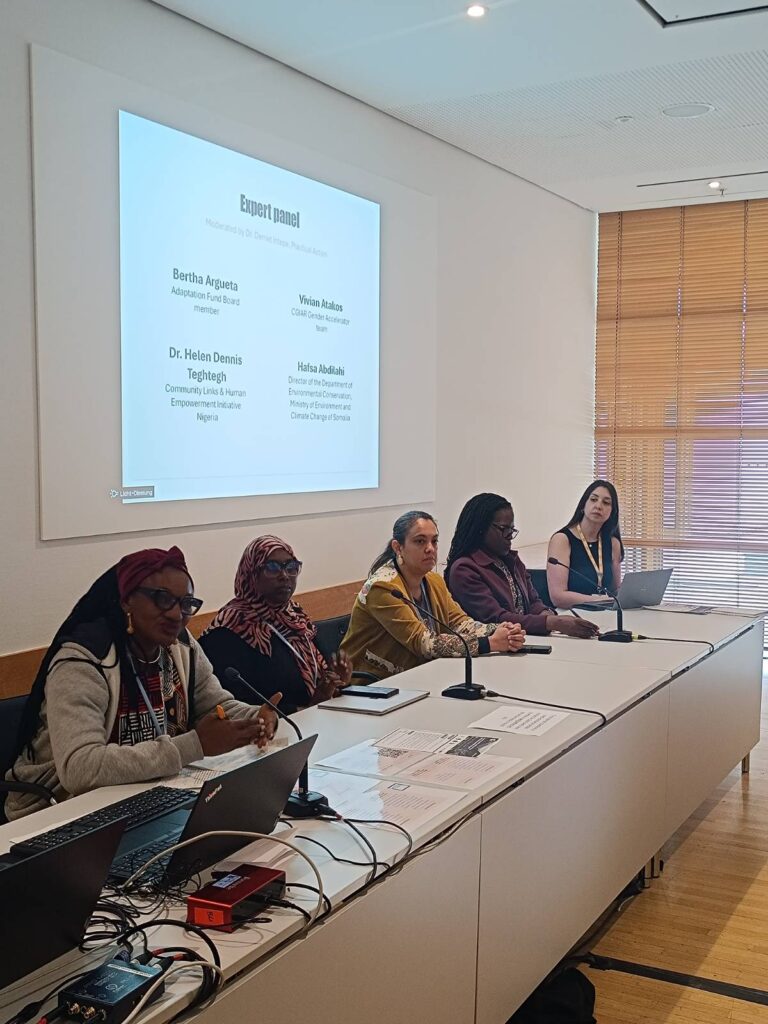
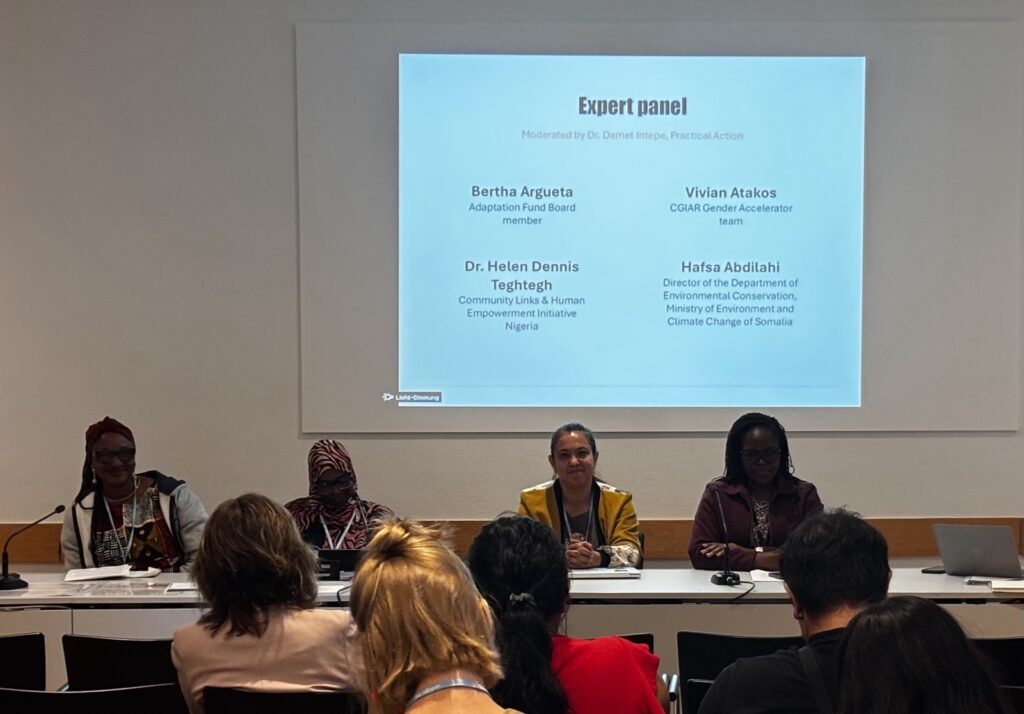
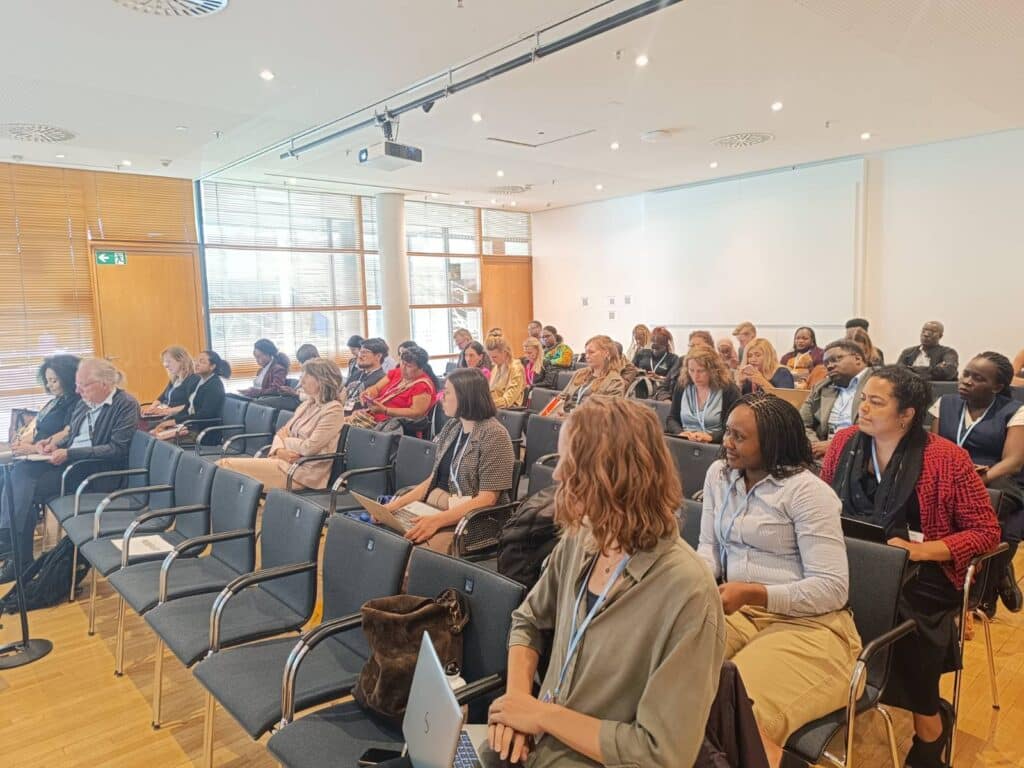
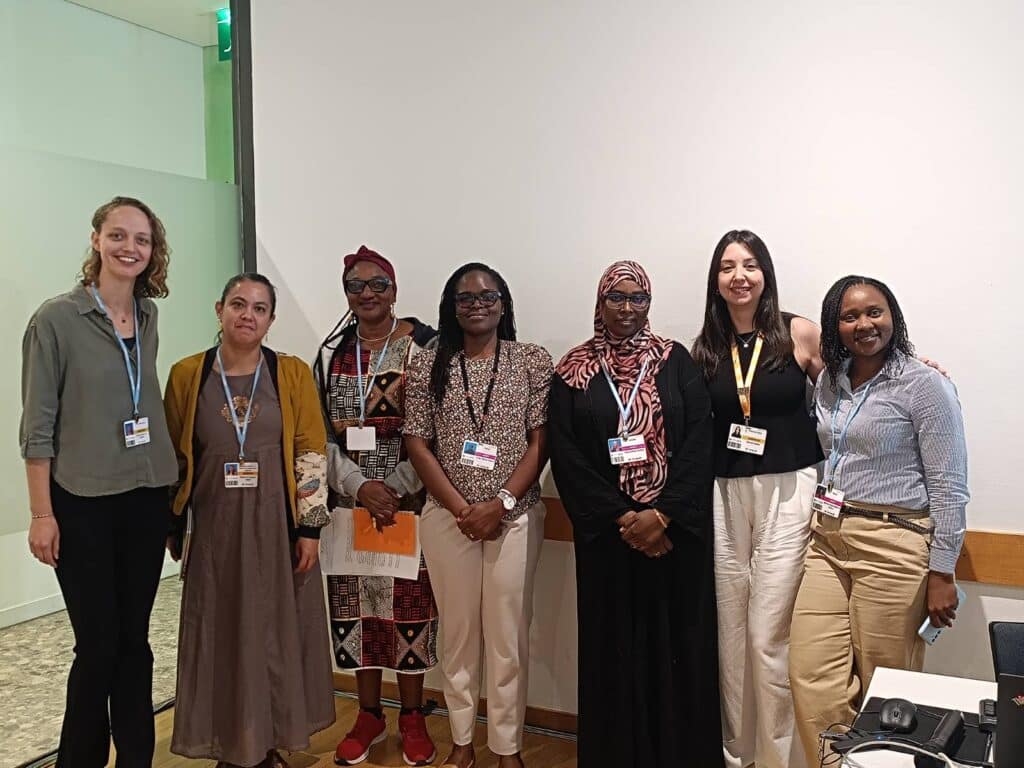
A panel of experts then examined the barriers preventing finance from reaching women and local actors and explored practical solutions to make climate finance more equitable and effective. The discussion was moderated by Demet Intepe of Practical Action and Marlene Achoki of CARE International, and featured Bertha Argueta, member of the Adaptation Fund Board; Helen Dennis Teghtegh of Nigeria’s Community Links and Human Empowerment Initiative; Vivian Atakos of the CGIAR Gender Accelerator team, and Hafsa Abdilahi, Director of the Department of Environmental Conservation at Somalia’s Ministry of Environment and Climate Change.
Key Takeaways
- Climate finance should not be gender-neutral
Climate finance can either reduce or reinforce inequalities. When it ignores social realities such as unequal access to land, finance, decision-making and resources, it tends to benefit those who are already better positioned to access funding, leaving women and marginalized groups behind. Gender-blind finance is therefore often ineffective and can deepen existing inequalities. - The people doing the work are often the least funded
Several speakers highlighted a disconnect between recipients of climate finance and people who are actually on the front lines of implementing adaptation actions. Community-based organizations, feminist organizations, and women’s groups are often the first responders during climate shocks and play a central role in resilience-building, yet only a small fraction of climate finance reaches them directly. Most funding continues to flow through larger international organizations and government structures. - Access barriers are structural, not individual
The panel stressed that the problem is not a lack of capacity among local organizations, but a funding architecture designed around requirements that favor larger institutions. Complex application procedures, reporting requirements, accreditation systems, and due diligence processes often exclude smaller local actors before they even have a chance to compete. - More money alone will not solve the problem
The discussion repeatedly returned to the idea that scaling climate finance is necessary but insufficient. The way finance is designed, delivered, tracked, and governed matters just as much as the volume of funding. Simply increasing finance without changing who can access it risks reproducing existing inequalities. - Women are not only vulnerable – they are leaders of solutions
Panelists pushed back against narratives that frame women solely as victims of climate change. Across adaptation, water management, agriculture, disaster preparedness, and ecosystem restoration, women are already leading climate solutions. The challenge is that financing systems often fail to recognize, support, and scale those efforts.
Practical actions needed to make climate finance gender-responsive
- Direct more finance to local women’s and community organizations
The strongest recommendation was to create dedicated funding windows and simplified access pathways for community-based and feminist organizations, coupled with technical support and capacity strengthening where needed. - Shift towards grant-based finance
Speakers argued that adaptation finance should increasingly be delivered through grants rather than loans. Countries and communities already facing climate impacts should not be pushed further into debt to finance adaptation and resilience. - Put women at the center of decision-making
Meaningful participation goes beyond consultation or representation. Women should help shape priorities, allocate resources, design projects, and influence decisions throughout the project cycle. - Improve accountability and tracking
Several participants stressed the need to move beyond measuring outputs and technology adoption to tracking who benefits, who participates, who controls resources, and whether interventions shift power relations. Monitoring should include gender-disaggregated data and indicators on empowerment, participation, and social outcomes. Practical tools such as the Reach–Benefit–Empower–Transform (RBET) framework provide a structured way to assess not only participation, but also who benefits, who gains agency, and whether interventions lead to meaningful social change. - Identify and prevent unintended harms
Climate projects can unintentionally increase women’s workloads, reinforce discriminatory norms or contribute to gender-based violence if benefits are captured by more powerful actors rather than intended beneficiaries. Strong safeguards and ongoing monitoring are therefore essential, including adaptation tracking systems that identify unintended gendered harms—an approach reflected in CGIAR recommendations on adaptation tracking—to enable timely course correction. - Make funding more flexible
Several examples highlighted the value of simplified application processes, flexible implementation timelines, mentoring support, and adaptive project management that can respond to realities on the ground. - Use local knowledge to target finance
Countries such as Kenya, Botswana, and Uganda have undertaken a gender and climate vulnerability mapping that is helping ensure scarce adaptation finance reaches those most at risk rather than being distributed through generic approaches. This methodology identifies where climate risks intersect with gendered vulnerabilities to better prioritize investments for equity and resilience. Areas where large numbers of women are participating in agriculture and food production and where extreme climate hazards trigger crop failure, pest and disease outbreaks, and degradation of land and water resources are mapped for priority action. - Breakdown silos
Gender equality, adaptation, climate finance, and development planning are often treated as separate workstreams. The panel emphasized the need for more integrated approaches across ministries, climate plans, adaptation strategies, and financing mechanisms.
Advancing Gender-Responsive Climate Finance: Exploring Challenges and Practical Solutions
Copy of the Takeaways Document from the SB64 Side Event