


When the rains no longer follow the seasons, Zambian farmers adapt to survive


In Sikalongo, a rural community in southern Zambia, the land stretches wide under an unforgiving sun. Fields of maize once followed the rhythm of predictable seasons. Today, climate change has broken that rhythm, and its impacts are felt long before the harvest.
“Our crops did not grow well, and this left many of us worried about how we would feed our families,” Deliwe Luhana recalled, describing the aftermath of the devastating 2023–2024 drought, which affected millions of households across Zambia.
For the 44-year-old mother of three in the Sikalongo community, the crisis extended beyond the fields as water, essential for crops, livestock, and daily life, had become increasingly scarce.
Like many others, her family was caught in a cycle of failed harvests, uncertainty, and growing food insecurity.
That began to change in 2025.
Through a disaster risk reduction project supported by the Czech Republic, CARE helped install water systems across the Sikalongo area, enabling more than 200 households to irrigate community gardens and grow food again.
“When CARE came, they didn’t just give us water; they helped us establish gardens,” Deliwe said. “These gardens are helping us grow nutritious food for our households.”
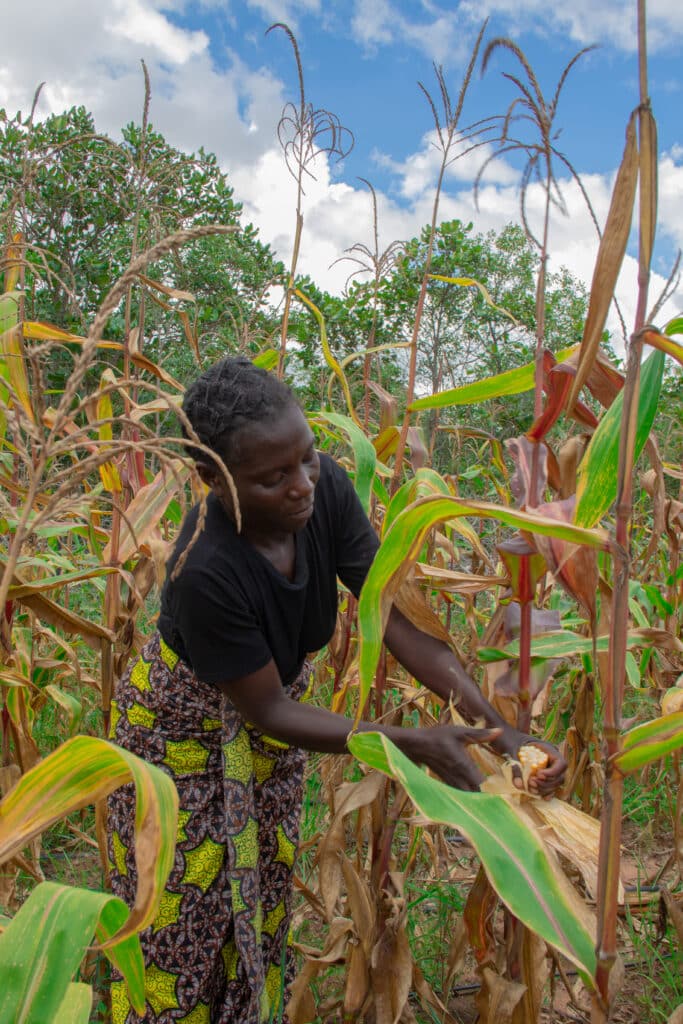
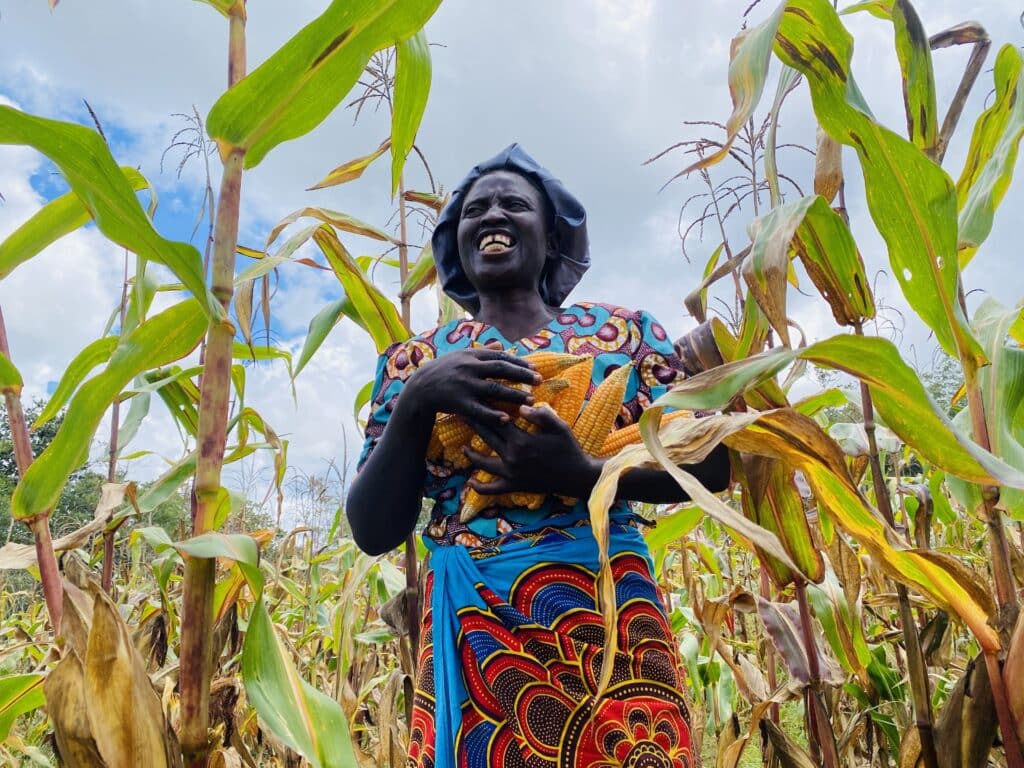
With access to water restored, the community planted orange maize alongside vegetables. Orange maize is a climate-resilient crop and more nutritious, rich in vitamin A, in a country where more than half of the children under five are vitamin A-deficient. The first harvest was modest but meaningful.
“Even though the harvest was small, we sold a portion and kept some aside so that families will have seeds for next year,” she said, adding that many people are still learning about the nutritional benefits of orange maize.
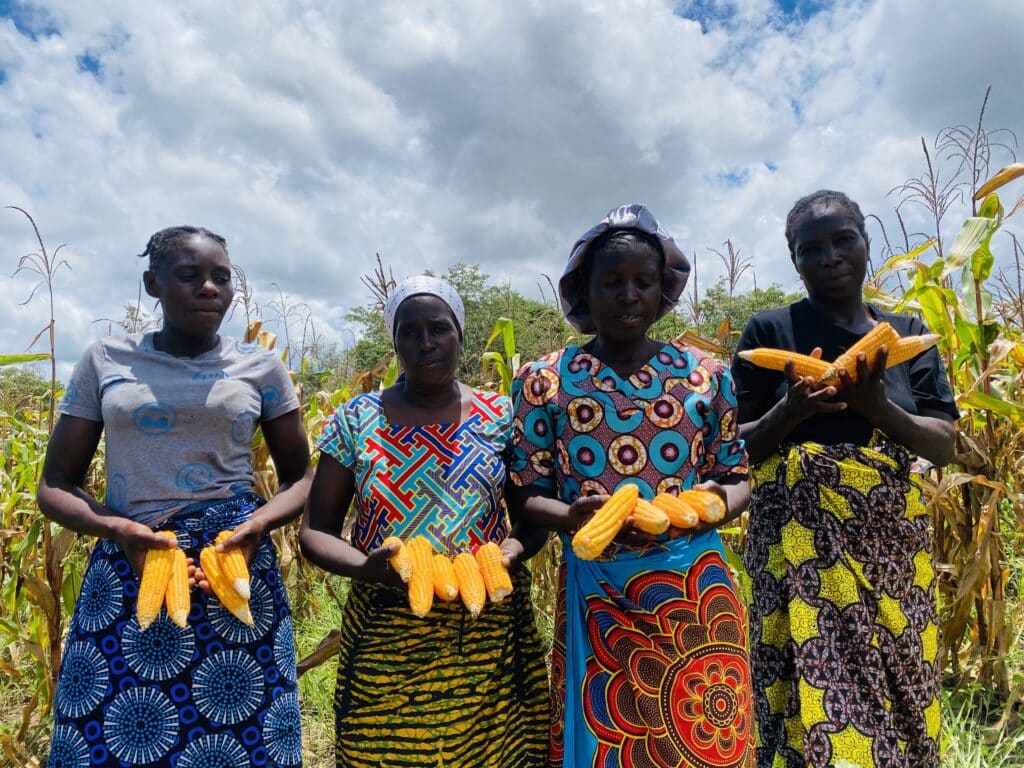
So far, the group has earned around USD 200 from maize and okra sales, a small but significant step toward rebuilding livelihoods, with weekly okra harvests expected to generate more income in the coming months.
Encouraged by the results, the community is already planning.
“After the harvest we had, we are now planning to plant tomatoes so that we can help even more families,” Deliwe said. “We do not want any household to experience hunger or lose a loved one because they had no food.”
Across the two communities, more than 1,700 people now have access to early warning information and reliable water, critical tools in a landscape where the climate is no longer predictable.
Adapting to a changing climate
Across Zambia, these challenges are widespread. Floods, droughts, pest infestations and rising food prices have left more than 1.2 million people facing severe food shortages.
“In the last three harvest seasons, I have harvested almost nothing,” says Buumba, a smallholder farmer. “It’s getting hotter, and the rain either comes too late or too heavy. There’s no such thing as normal weather anymore.”
For farmers like Buumba, adaptation has become essential.
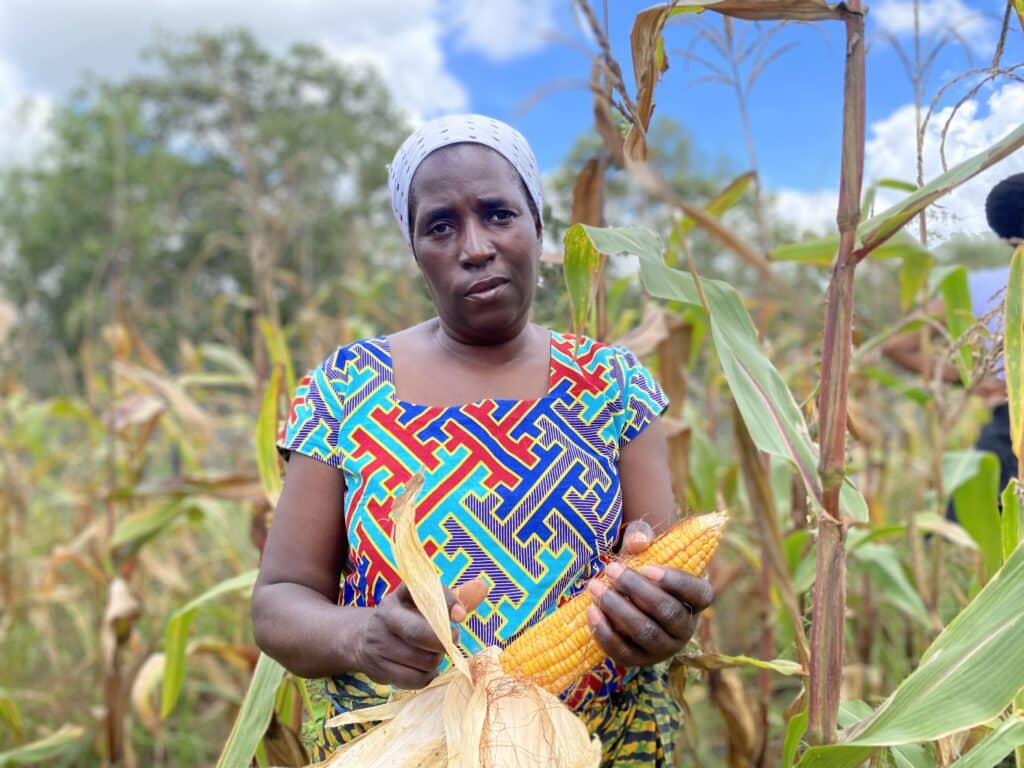
Through CARE’s support, she began planting orange maize, a crop better able to withstand extreme weather. When floods destroyed other crops, it proved its value.
“It was the only thing that survived the floods,” she said. “Our white corn was destroyed, but the orange corn saved us.”
Anastasia Munkondya, chairperson of CARE partner Choma District Women Development Association, says the crop is helping families become more resilient.
“It grows well even with less rainfall, and families are now eating better and earning more from what they produce.”
Beyond introducing new crops, communities are also adopting broader strategies to cope with a changing climate.
“We attended training courses run by CARE and learned how to plant trees, start gardens, and save money,” says Febbie, another farmer. “We use the trees for charcoal, soil improvement, shade, and medicine.”
All images above © 2026 Margaret Ngonga / CARE
These approaches are helping communities move from short-term coping to longer-term resilience. Reforestation helps protect against soil erosion, gardens provide both food and income, and savings groups strengthen financial independence.
In a country where more than half the population lives below the poverty line, such changes can mean the difference between recovery and repeated crisis.
From survival to resilience
For Deliwe, Buumba, and their communities, the shift is already visible.
What began as an emergency response — access to water after drought — is gradually becoming a pathway toward greater stability and self-reliance.
And while the climate continues to change, so too do the strategies of those living on the frontlines.
“Our maize fields should still be standing,” Buumba says, “so that we don’t have to go hungry for weeks again.”