Climate-Resilient Housing

Climate-Resilient Housing

A house is said to be climate-resilient when measures that help protect housing and its direct surroundings from negative climate impacts are in place 

Housing and direct surroundings mean the homestead, consisting of housing (temporary and/or permanent) and the surrounding (land and vegetation) that might affect the housing (e.g., trees for shading or that might damage the house during storms, steep hillside that might cause landslides, drainage around the house that might affect flooding of the house).  

CARE promotes practices and/or measures that help protect housing and its direct surroundings from negative climate impacts such as:   

  • Deliberate site selection of housing, considering climate-related shocks and stresses such as landslides and storms.  
  • Selection of construction materials considered, including extreme temperatures such as a thatched roof instead of corrugated iron sheeting and insulation materials.  
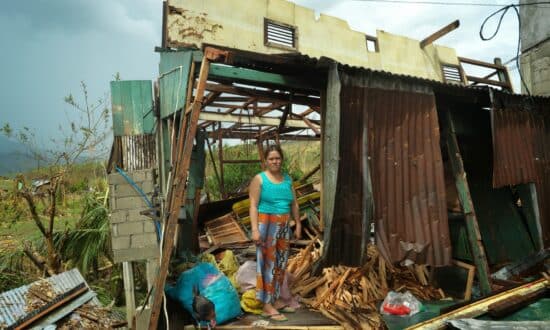
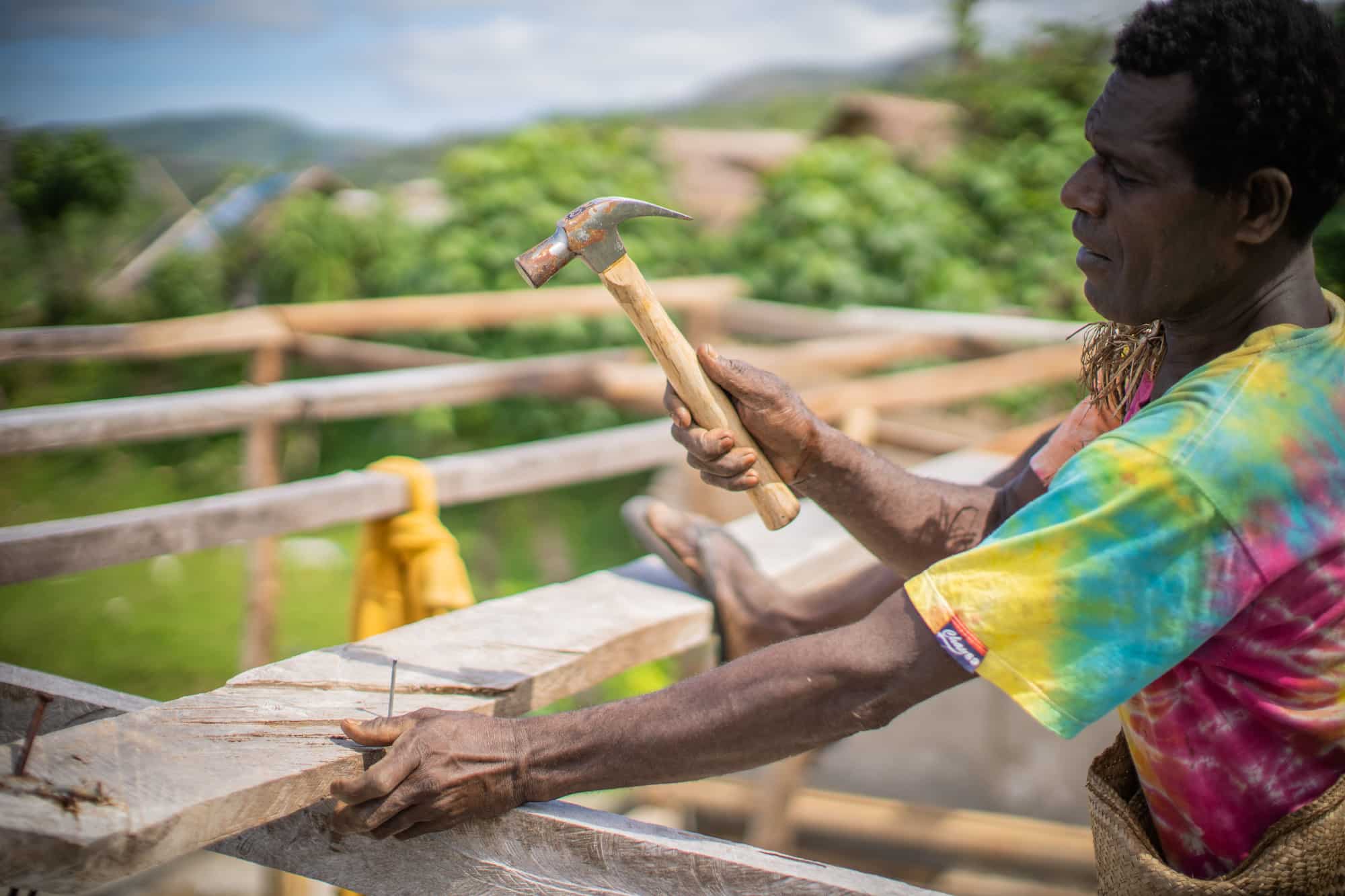
  • Adaptations in construction techniques (such as typhoon-proof joints for roofs, building on stilts, ventilation, and insulation).  
  • Activities in the surroundings to protect housing (e.g., trim trees around houses, grow shade trees for heat reduction, drainage to avoid flooding, tree planting to limit landslide risks in mountainous areas, waste collection to facilitate water evacuation and avoid flooding).  
  • Protection of water wells from flooding.  
  • Take out home insurance to cover costs for repair or rebuilding in case of damage.
Senegal

Country Description

Senegal is a country that is vulnerable to the impacts of climate change from drought, locust invasion, flooding and related health epidemics, sea-level rise, coastal erosion and its corollaries, and bush fire (World Bank Climate Change Knowledge Portal). The country is considered highly vulnerable to recurring environmental shocks, with droughts and floods having intensified in recent years, and climate change is expected to further increase the extremes of weather patterns and natural hazards putting vulnerable populations such as the 50.8 percent of the population (8,579 thousand people in 2021) considered as multidimensionally poor, while an additional 18.2 percent is classified as vulnerable to multidimensional poverty (3,069 thousand people in 2021) (2023 Multidimensional Poverty index, UNDP). The adverse effects of the climate crisis disproportionately affect the poormainly through decreased agricultural productivity, increased food prices, coastal flooding and erosion, and associated health hazards, with female-headed households more economically vulnerable to even modest levels of climate change (World Bank Group Systematic Country Diagnostic of Senegal).

Climate Justice project
1
Closed Climate Justice project
1
People directly reached via Climate Justice project in FY24
205
Barbados

Country Description

Barbados, a small island nation within the Carribean region considered is highly vulnerable to the impacts of climate change. The country is vulnerable to hurricanes and natural hazards and is particularly susceptible to coastal inundation and sea level rise, which increase tidal and storm surge levels, coastal erosion, increasing temperatures, changes in rainfall patterns, cyclones, and droughts among others (World Bank Climate Change Knowledge Portal).

Barbados has also been noted as a country at the forefront of reforming the world of development finance, particularly how rich countries help poor countries cope with and adapt to climate change, through movements like the Bridgetown Initiative. (World Economic Forum)

Climate Justice project
1
Closed Climate Justice project
1
South Sudan

Country Description

he country has the population of approximately 13.1 million people, with 81.8% resides in rural areas, primarily engaging in subsistence agriculture. The climate of South Sudan is similar to tropical climate with high rainfall season, followed by a drier season. Rainfall occurs in a single rainy season from March to November, peaking between May and September. While the southern and eastern parts receive higher rainfall, the country experiences significant climate variability. Consequently, droughts and floods frequently impact livelihoods, particularly in agriculture (Climate Change Knowledge Portal).   

The country is highly vulnerable to climate risks, including rising temperatures, erratic rainfall, prolonged droughts, and severe flooding. Since the 1970s, average temperatures have increased by 1-1.5°C, with projections indicating further warming by 2060 (African Development Bank). These climate risks, combined with widespread displacement due to ongoing conflict, have intensified food insecurity, and increasing the risk of local conflicts. 

To response to these challenges, South Sudan put the major priorities for actions and investments for climate change mitigation and adaptation strategies (USAID South Sudan Climate Vulnerability Profile). These are outlined in its NDC, focus on reducing greenhouse gas emissions through policies in energy, land use, and transport. The country estimates that at least $50 billion is required for mitigation and adaptation efforts by 2030. However, these estimates remain approximate, and further analysis is needed to refine support requirements.

Climate Justice project
4
Active Climate Justice project
2
Closed Climate Justice project
2
People directly reached via Climate Justice project in FY24
63,360
Philippines

Country Description

Located in the heart of Southeast Asia, the Philippines is found near the equator and within the Pacific Ring of Fire. Because of this geographic location, the Philippines is counted as one of the most vulnerable countries to various hydrometeorological disasters and ranks first among 193 countries assessed for disaster risk (World Risk Index 2024).  


With the effects of the climate crisis, low-lying coastal communities are threatened by rising sea levels, while increasingly intense typhoons averaging at about 20 per year (Philippine Atmospheric, Geophysical and Astronomical Services Administration) bring devastating floods and landslides. Moreover, prolonged droughts and erratic rainfall patterns disrupt agriculture, water resources, and access to basic services. These climate impacts disproportionately affect marginalized communities, exacerbating poverty, increasing gender-based violence, and overall inequality. Complex and ever-changing socioeconomic conditions also make the country particularly susceptible to the intensifying effects of climate change. 

Climate Justice project
12
Active Climate Justice project
8
Closed Climate Justice project
4
People directly reached via Climate Justice project in FY24
40,173
People impacted via CJ project since 2021
11,799
Bangladesh

Country Description

Bangladesh has a humid, warm climate influenced by pre-monsoon, monsoon and post-monsoon circulations and frequently experiences heavy precipitation and tropical cyclones (World Bank Climate Change Knowledge Portal). In the World Risk Report, Bangladesh is 9th among 193 countries assessed for disaster risk (World Risk Index 2023). 

In rural areas, where nearly 80 percent of the population live, climate change has an immediate and direct effect on the health and wellbeing of millions of people who depend on natural resources for their livelihoods. The impacts of climate change are also increasingly felt in large cities that are exposed to various climate-induced hazards, including variations in temperature, excessive and erratic rainfall, water logging, flooding, and heat and cold waves (Bangladesh: Finding It Difficult to Keep Cool as cited in Rabbani et al, 2011). 

Climate Justice project
18
Active Climate Justice project
12
Closed Climate Justice project
6
People directly reached via Climate Justice project in FY24
976,027
People impacted via CJ project since 2021
1,413,001
Honduras

Country Description

Honduras is a country in Central America, bordered by the Caribbean to the east and the Pacific to the west. Honduras’s climate is hot and tropical in the coastal lowlands and more temperate in the highlands. Forest takes up 41% of the country’s land followed by 27% that is agricultural (World Bank Group, 2021). 82% of the country is mountainous (ibid.). 50% of Honduras’s population lives in rural areas – of which 65% live in poverty – and depend on rainfed agriculture (World Bank Group, 2023). Honduras is highly vulnerable to the effects of climate change due to its high exposure to climate-related hazards (e.g., hurricanes, drought, tropical storms, floods) (ibid.). 

Temperatures are projected to increase by 1-2.5°C by 2050 and extreme rainfall and flood events are expected to become more frequent, along with a reduction in rainfall and an increase in droughts (GRID Geneva, n.d.). This is expected to have a negative effect on hydropower production which currently generates almost 40% of Honduras’s energy as well as on freshwater availability and quality (particularly in the Dry Corridor) (ibid.). Climactic changes are also expected to increase the spread of vector- and waterborne diseases, worsen food insecurity, and higher yield losses due to drought and disease. As temperatures rise, coffee (the main agricultural export) farmers will need to move to higher elevations increasing land degradation (ibid.). Severe climate change effects along with mining, deforestation, and agro-industry has severely threatened livelihoods and human rights, pushing many in poorer communities in Honduras to flee the country (UN, 2023). 

The DNCC (Honduras Climate Change National Office) is responsible for delivering national-level action on adaptation. Honduras’s Country Vision and National Plan (2010) aims to focus on sustainable development whilst minimizing environmental vulnerability and climactic threats. According to GRID Geneva (n.d.) Honduras has made progress in setting up a policy and regulatory framework for addressing climate change but many are yet to be implemented. 

Climate Justice project
3
Active Climate Justice project
2
Closed Climate Justice project
1
People directly reached via Climate Justice project in FY24
6,767
Zimbabwe

Country Description

Zimbabwe is a landlocked country in southeast Africa. Most of the country lies on a high central plateau with mountains in the east. Zimbabwe has a predominantly subtropical climate, but the south is known for its extreme heat, whilst the eastern highlands have cooler temperatures.  Zimbabwe is considered to have high vulnerability and a very high lack of adaptive capacity according to the 2023 World Risk Index. 

The key climate change impacts expected in Zimbabwe are water- and food-security related, as well as the health impacts from vector and waterborne diseases (UNDP, n.d.). Between 1970 and 2016 Zimbabwe’s mean annual temperature increased about 0.3˚C per year (World Bank Group, 2021). Zimbabwe’s temperature is expected to increase between 1˚C -1.5˚C by 2040 from a 1986-2005 baseline, depending on the emission scenario (ibid.). Average rainfall is projected to decrease by 10% in this period, however, there is more uncertainty with these estimates (GRID Geneva, n.d.). At the same time, intense rainfall leading to flooding is expected to increase. 80% of agriculture – accounting for 67% of total employment in the country – is rainfed, making it one of the sectors most vulnerable to the effects of climate change (World Bank Group, 2021). By 2050, Zimbabwe is projected to have a 38% decrease in national water availability per capita because of climate change which is expected to have severe knock-on effects for agriculture, power generation, health, tourism, and the country’s wildlife species (ibid.). 

Zimbabwe has submitted the third version of its NDC with a plan for 2025-2035 (Government of Zimbabwe, 2025) in which it outlines that adaptation is its policy goal for the next decade. Zimbabwe is implementing various projects with national and international funding. Along with the Green Climate Fund Zimbabwe is focusing on projects related to Renewable Energy, Integrated Waste Management, Forestry, Agriculture, and DRR (Government of Zimbabwe, 2021). 

Climate Justice project
5
Active Climate Justice project
2
Closed Climate Justice project
3
People directly reached via Climate Justice project in FY24
71,297
People impacted via CJ project since 2021
1,452,962
Malawi

Country Description

Malawi is a landlocked country in the southern part of Africa, bordered by Tanzania, Mozambique, and Zambia. The country has a diverse topography, with one of the most significant geographical features is Lake Malawi, the third-largest lake in Africa. Other than that, the country’s topography consists of high, well-watered plateaus broken by large hills (World Bank Group, 2021).   

Malawi has a subtropical climate, characterized by two seasons: rain season from November to April, and dry season from May to October. The country experiences high temperature and humidity, with different range of temperature depending on the region and season. However, recently the country has experienced increased in frequency of climate change impacts including erratic rainfall, droughts, prolonged dry spells and strong winds. These changes has impacted on various sectors of the economy such as agriculture, health, water, energy, transport, education, gender, forestry, wildlife and infrastructure. Consequently, as the majority of Malawians rely on small-scale, rain-fed agriculture, the communities are highly dependent on the weather patterns. This makes the communities even more susceptible to extreme weather events (Irish Aid, 2018).  

Recognizing the challenges, the Government of Malawi has initiated adaptation and mitigation measures and strategies including Malawi 2063, which emphasizes environmental sustainability as one of the most cross-cutting factors. Furthermore, Malawi submitted their NDC with the unconditional and conditional contribution of 51% reduction in GHG emissions by 2040 across the three pillars:  (i) institutional framework, (ii) knowledge, technology and financing and (iii) resilience of the most vulnerable. 

Climate Justice project
14
Active Climate Justice project
9
Closed Climate Justice project
5
People directly reached via Climate Justice project in FY24
623,667
People impacted via CJ project since 2021
82,294
Ghana

Country Description

Ghana is a lower-middle-income country in West Africa with a coast along the Atlantic Ocean. It has two main ecological zones: the southern region (30%) is predominantly forest whilst the remaining 70% of the country is part of the Northern Savannah Ecological Zone and is drier. Average annual rainfall in the south is almost double that experienced in the north (World Bank Group, 2023).

Climate change poses a significant threat to Ghana due to sea level rise in the south and Sahelian climate effects in the north (Ghana EPA, 2020). Average temperatures are expected to increase by 2.3°C to 5.3°C by the end of the century (World Bank Group, 2021). Ghana is vulnerable to intense and complex droughts, flooding, increasing aridity, and faces a high degree of risk to hazards and disasters. The key climate change impacts in Ghana will be in the health sector due to the rise in infectious disease and agricultural sectors resulting from changes in rainfall and flooding along the coastal areas (World Bank Group, 2023). More than 70% of the country’s land area is used for agriculture, a sector which employs 45% of Ghana’s population (World Bank, Group 2021). Most of the agricultural production takes place in the Northern Savannah Ecological Zone, where poverty rates are close to 45% (compared to a national average of 10%) and where the effects of climate change are expected to be most severe (ibid.). ¼ of the population lives along the coast in highly urbanized areas like Accra which are vulnerable to extreme flooding (ibid.).

Ghana has invested in a range of adaptation measures and climate related projects including sea defense projects along the coastline, building the resilience of smallholder farmers, and improving flood risk and waste management in Accra (Ghana EPA, 2020).

CARE Ghana’s resilience approach focuses on reducing the impact of hazards, enhancing people’s ability to accommodate the immediate impact of shocks and stresses and improving capacity to adapt to frequent floods, drought and other climatic conditions. CARE Ghana’s work at the community level is driven by a participatory Community-Based Adaptation (CBA) approach, involving community awareness-raising, training and decision making, to identify appropriate adaptation responses to the challenges faced by communities. Beyond the community level, CARE Ghana works with key partners and civil society organizations to influence policy formulation and implementation at the national and sub national level.

Climate Justice project
12
Active Climate Justice project
7
Closed Climate Justice project
5
People directly reached via Climate Justice project in FY24
73,505
People impacted via CJ project since 2021
1,595
Cameroon

Country Description

Cameroon is a tropical climate country located in the western part of Central Africa, bordering the Atlantic Ocean. It has a population of 26.6 million people and is considered a lower-middle-income country. In terms of contribution to the GDP, Cameroon’s economy is dominated by the services sector, followed by the industry; however, agriculture is the primary means of livelihood and employs 44 % of the working population (GIZ Climate Risk Profile).

With climate change, temperature and annual precipitation are projected to rise. This will affect water availability, particularly in northern Cameroon, but will also cause more frequent and intense flooding that could severely impact the infrastructure sector. On top of that, sea level is expected to rise to 39 cm, threatening Cameroon’s coastal communities. As agricultural production is subsistence-based and rainfed, it is particularly vulnerable to precipitation changes, and extra environmental challenges, like deforestation and overgrazing, further threaten this activity (GIZ Climate Risk Profile).

Present in Cameroon since 1978, CARE Cameroon has a long history of working on agriculture, natural resource management, and climate change adaptation, and is present in six of the country’s ten regions. In Cameroon, CARE works in three main areas: (1) effective, sustainable and inclusive economic development for youth and women, including climate change; (2) the right to accessible and quality health services; and (3) early recovery from humanitarian crisis situations.

Climate Justice project
2
Active Climate Justice project
1
Closed Climate Justice project
1
People directly reached via Climate Justice project in FY24
6,278
Tanzania

Country Description

Tanzania is the largest country in east Africa with a coastline along the Indian Ocean. Tanzania is predominantly a highland area sitting 900-1800m above sea level with mountains ranges throughout, except by the coast where it is flatter. Tanzania’s climate is largely driven by altitude, with tropical lowlands in the east to colder highlands in the north and southwest. It is vulnerable to the effects of climate change in public health, energy supply, infrastructure, water resources, and agriculture (World Bank Group, n.d.). Climate change is expected to exacerbate the risks from extreme weather events such as variation in rainfall and frequent and prolonged droughts and floods (ibid.). 

Air temperature in Tanzania is expected to rise across all emission scenarios, with the annual number of very hot days projected to rise substantially with high certainty (GIZ, 2021). Sea level rise threatens communities along the coast and may cause saline intrusion, threatening water supply and biodiversity (ibid.). Projections on precipitation vary with some models projecting a large decrease (>42mm by 2080 compared to 2000) whilst others suggest almost no change (ibid.). However, heavy precipitation events are expected to become more intense (ibid.). Water availability is predicted to decline by 76% under both RCP2.6 and RCP6.0, though this is region-specific (ibid.). Changes in waterflows have impacted the country’s capacity to generate and supply electricity, particularly hydropower, which has been directly attributed to climate change driven droughts (United Republic of Tanzania, 2007). 

In its first NDC (2021) Tanzania outlines its adaptation measures in various sectors such as forestry (e.g. enhancing participatory sustainable forest management), coastal, marine environments and fisheries (e.g., promoting livelihood diversification for coastal communities), and energy (e.g., promoting climate-smart rural electrification). 

Climate Justice project
14
Active Climate Justice project
5
Closed Climate Justice project
9
People directly reached via Climate Justice project in FY24
26,526
People impacted via CJ project since 2021
164,681
Ethiopia

Country Description

Ethiopia is a landlocked country in the Horn of Africa with a highly diverse climate due to its varied landscapes (rainforests in the south and southwest and deserts in the east, northeast, and southeast lowlands) (CCE Country Profile). It exhibits a high variability in precipitation between areas of high and low elevation (GIZ, 2021). Its average temperature has increased by an average of 1°C since the 1960s (World Bank, 2021) and air temperature is expected to increase between 1.6-3.7°C relative to pre-industrial levels by 2080 (GIZ, 2021). 

Ethiopia has one of the fastest growing and poorest (rGDP pc USD570 in 2018) populations in the world (GIZ, 2021). 73% of the population is engaged in the agricultural sector and is reliant on subsistence-based and rain-fed agriculture for food security and livelihoods (ibid.). These factors exacerbate vulnerability to the high degree of risk from hydrometeorological hazards and disasters (World Bank, 2021) Ethiopia is subject to, along with climate change-driven threats including declining water availability, reduced food security, and increased frequency and severity of droughts and floods. Tensions between agricultural, livestock, and human population demands for water are expected to increase in the coming years as seasonal rainfall becomes more variable (World Bank, 2021). 

Ethiopia is focusing on projects to improve crop and livestock production practices in an attempt to increase food security and farmer income as well as to increase its watershed capacity fourfold by 2030 (from 2018 baseline) (Nationally Determined Contribution 2021). 

Climate Justice project
16
Active Climate Justice project
6
Closed Climate Justice project
10
People directly reached via Climate Justice project in FY24
503,115
People impacted via CJ project since 2021
1,111,625

EXPLORE

Other Themes

Donate for people and the planet

Help the CARE Climate and Resilience Academy share tools for change.

$
 
Personal Info

Credit Card Info
This is a secure SSL encrypted payment.

Donation Total: $25 One Time

This site is protected by reCAPTCHA and the Google Privacy Policy and Terms of Service apply.