


When the warning comes before the flood: How communities in Papua New Guinea turned early action into protection


The bell began to ring at around 1:30 in the morning,
For the people of Gitunuha, a small village in Papua New Guinea’s Eastern Highlands, that sound meant “leave now”. Families gathered children, elderly relatives and neighbours and moved to higher ground before the Asaro River burst its banks.
Days later, floodwaters had affected 52 households and more than 260 people. Yet homes, livestock, and crops suffered remarkably little damage. The reason was simple: people had time to act.
The February 2026 floods offered a real-world test of CARE Papua New Guinea’s anticipatory action approach, supported through the Australian Humanitarian Partnership. Rather than waiting until disaster strikes, anticipatory action uses weather forecasts and locally agreed trigger points to activate preparedness measures before the worst impacts occur.
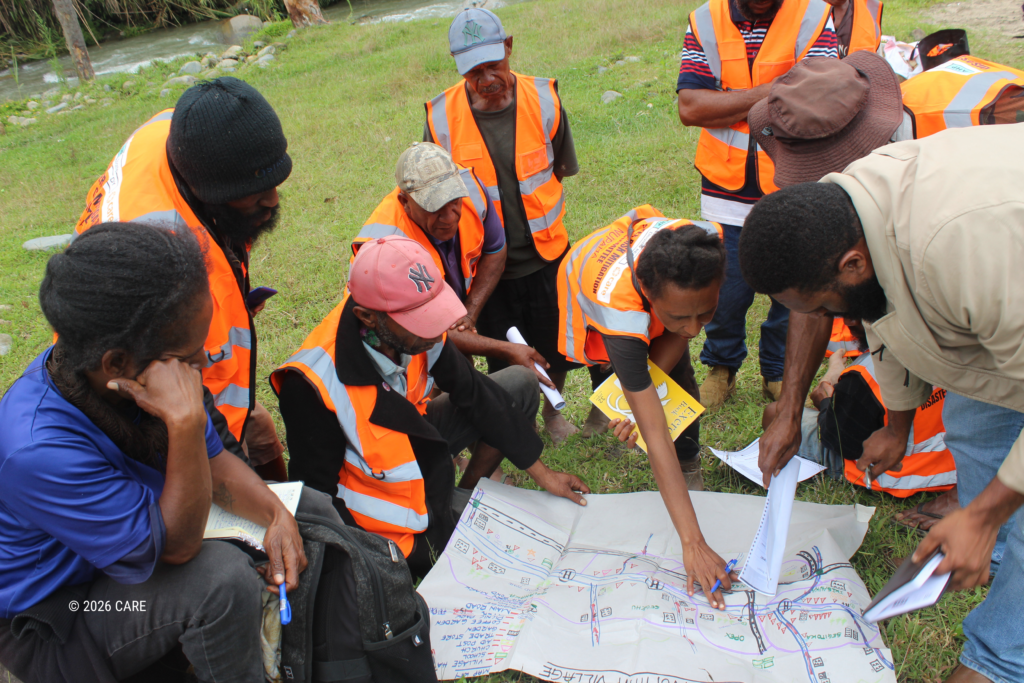
In Gitunuha, those trigger points combined modern forecasting with generations of local knowledge. Community members watched for dark clouds building upstream, changes in the river’s colour and smell, rising water levels and floating debris. These observations were checked against simple water-level markers installed along the river. Once the agreed-upon threshold was reached, community volunteers sounded bells that alerted households to evacuate. More than nine in ten households received the warning through the community bell, while others were alerted directly by neighbours. Almost every resident surveyed said they immediately understood what the warning meant and what action they should take.
“The most effective early warning systems don’t replace local knowledge, they strengthen it, giving communities greater confidence to act before disaster strikes.”
The warning system had not appeared overnight. Community disaster committees had spent months preparing evacuation plans, running simulation exercises and identifying safe locations. Those preparations proved decisive. After the activation, 97% of participants said the warning system, training and simulation exercises had been “very helpful”, and the same proportion reported that their understanding of early warning had increased since the project began. When heavy rain triggered flood warnings from Papua New Guinea’s National Weather Service, communities did not have to improvise. They simply put into practice what they had already rehearsed. Information flowed rapidly between community volunteers, provincial authorities and CARE teams through local communication networks and mobile messaging, allowing the response to be activated within hours.
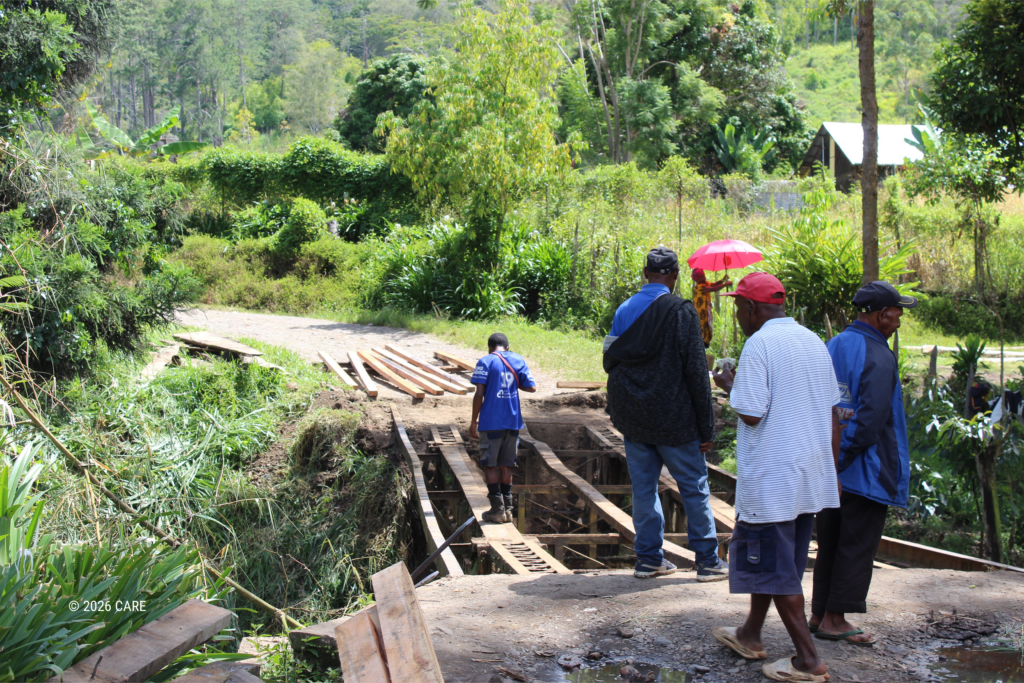
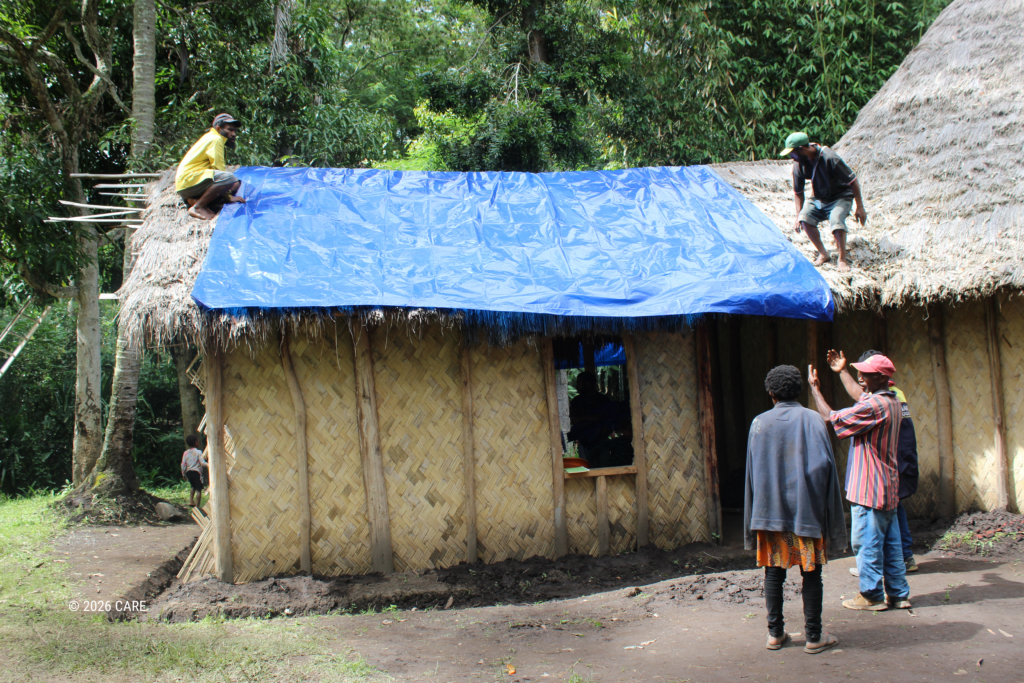
The response extended beyond evacuation. The readiness activation helped strengthen the village evacuation center by repairing roofing, improving rainwater collection, constructing accessible latrines, installing solar lighting, and restoring access after floodwaters damaged a nearby bridge. Food assistance mechanisms were also prepared in advance so they could be activated immediately if conditions worsened.
Perhaps the clearest measure of success was what did not happen.
Although more than 260 people were temporarily displaced at the height of the flooding, assessments found only limited damage to homes, gardens and livestock. The early warning gave families valuable time not only to evacuate, but also to protect their livelihoods. Some households harvested sweet potatoes, taro, bananas and cassava before floodwaters arrived, while others moved livestock to higher ground or reinforced shelters that were already built above expected flood levels. Rather than simply escaping danger, many households were able to reduce the economic losses that floods often leave behind.
Women played a particularly important role during the evacuation. CARE’s assessments found that mothers often led families to safety and women consistently reported higher engagement in preparedness activities than men. People living with disabilities also described how advanced warning gave them time to relocate safely, avoiding the fear and uncertainty they had experienced during previous floods. Overall, 97% of respondents said the warning system reduced fear because they knew where to go, what to take, and how to respond. Many also emphasised that the warning system strengthened, rather than replaced, traditional knowledge, confirming local observations of the river and giving people greater confidence to act early.
“The true measure of anticipatory action is not how much aid is delivered after a flood, but how many homes, harvests and livelihoods are protected before the water arrives.”
The activation also highlighted important lessons. While community-level preparedness proved highly effective, household preparedness remained uneven. Some families reached evacuation centers without food, drinking water, lighting, or emergency supplies. In a short-lived flood, this had limited consequences, but a more severe or prolonged event could expose significant vulnerabilities. The experience underlined that effective anticipatory action depends not only on reliable early warning, but also on practical household planning that enables families to sustain themselves during an evacuation.
Another lesson concerned expectations. Some residents assumed that evacuation would automatically be followed by emergency relief distributions, reflecting a misunderstanding of what anticipatory action is designed to achieve. Unlike traditional humanitarian response, anticipatory action aims to reduce risk before disaster strikes, limiting the need for emergency assistance afterwards. Clearer communication about that distinction will be an important priority in future activations. The project also highlighted operational lessons, including the importance of working with multiple pre-qualified suppliers after one vendor withdrew during the activation, and maintaining community engagement between project phases so preparedness does not fade between flood seasons.
In a world where climate change is making floods and other weather extremes more frequent and less predictable, the events in Gitunuha offer a practical example of what resilience looks like. It is not a sophisticated technology or an expensive engineering project. It is a community that knows the river, trusts the warning, has practised what to do, and is able to move before rising water becomes a disaster.
When the bell rang in the early hours of that February morning, it did not stop the flood. It did something more important: it gave people the time they needed to protect their families, their homes, and their livelihoods before the river arrived.
Learn more by checking out the report:
AHP Anticipatory Action Post-Activation Report – Readiness (CARE in Papua New Guinea)