


Growing, Protecting, Adapting: When Women Farm the Future


As 2026 marks the International Year of the Women Farmer, CARE International is elevating women-led climate adaptation as essential to resilient food systems and climate justice.
Dawn breaks over a patchwork of small fields, and the first workday decisions are already urgent: whether to risk planting before the rains arrive, whether to spend scarce cash on seed, whether to walk further for water because the closest source ran dry early this year. In many rural communities, these decisions sit disproportionately on women’s shoulders: women who grow food, manage households, and hold communities together, even as climate shocks make every season less predictable.
That reality is exactly why the United Nations has declared 2026 the International Year of the Woman Farmer, a global call to recognize women’s central role across food systems, and to close the gender gaps that keep them undervalued and under-resourced.
Women are indispensable to global agrifood systems, holding up across production, processing, distribution, and trade while sustaining household food security and nutrition. About 40% of working women worldwide are employed in agrifood systems, almost on par with men. Yet, their work is routinely undervalued. Women farmers and agricultural workers are disproportionately concentrated in insecure, informal, and low-paid jobs, and continue to face deep-rooted barriers to land, finance, technology, education, extension services, and influence over the decisions that shape food systems and climate resilience.
For CARE, the year is not a symbolic moment; it’s a spotlight on what we see and experience every day: climate resilience succeeds and is sustainable when women farmers have equal access to land, finance, information, and decision-making power.
Across CARE International’s climate-smart agriculture and climate adaptation work, the focus is practical and immediate: help women farmers strengthen production and nutrition today, while building resilience for tomorrow. That means pairing technical solutions, like drought-resilient seeds, agroecological practices, water management, and soil restoration, with approaches that shift power: women-led learning, savings and credit, and community-led planning that elevates women’s voices. CARE has long worked with peer organizations to underscore that women’s leadership is not an “add-on,” but a core condition for lasting outcomes.
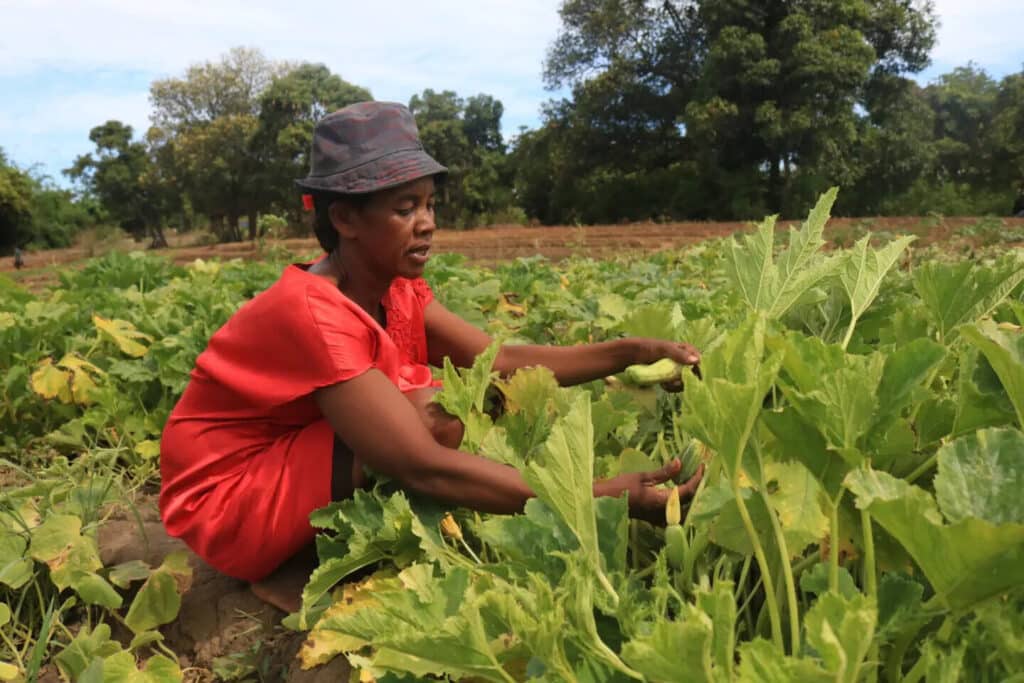
Take the programme She Grows the Future. Since 2021, the programme implemented by CARE with support from the L’Oréal Foundation has reached over 8,000 women farmers across Ecuador, Peru, Laos, Madagascar, and Vietnam. The project combines community-based adaptation with women’s leadership in agricultural learning, including field schools run by women leader farmers sharing agroecology and resilient practices with other local women, alongside seed banks stocking climate- and stress-resistant varieties, tools that can mean the difference between a failed h2222arvest and a family staying afloat. Just as importantly, the project strengthened women’s economic power through savings and credit groups and women-led cooperatives, while also supporting community adaptation planning and efforts to influence local
decision-making.
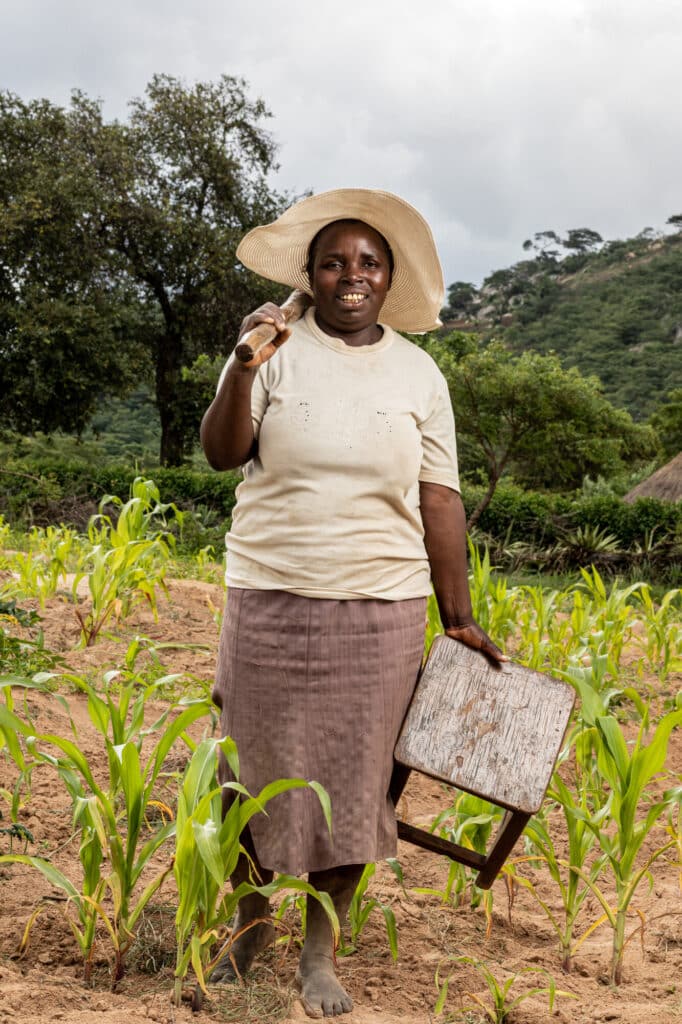
In Zimbabwe, the resilient food security activity of a program called Takunda (“we have overcome” in Shona language) supports women, youth, and chronically vulnerable households to increase incomes, improve nutrition, and withstand the shocks that threaten food security, including through a resilience design approach which helps them grow food even in extreme droughts or floods, with higher yields.
Image © 2021 CHARMAINE CHITATE / CARE
In other contexts, resilience starts with the land itself. The Regreening Africa initiative, implemented by a consortium that includes CARE, set out to improve livelihoods, food security, and climate resilience through inclusive land restoration approaches. Between 2021 and 2023, the initiative supported 500,000 farm households across eight countries in sub-Saharan Africa and the Horn of Africa, helping to restore around one million hectares of degraded land. The initiative will continue through 2028 in seven countries, with CARE implementing in Nigeria and Somalia.
Regenerative agriculture and restoration approaches like these are not just environmental wins; they protect soils, stabilize yields, and reduce the “last-mile” burden that often falls on women when landscapes degrade, more time searching for fodder, fuel, and water, less time for school, income, or rest.
And sometimes, the turning point is a shift in who holds resources and makes decisions. In Peru, El Agua Nos Une (Water Unites Us) strengthens the implementation of public policies with the participation of civil society and the private sector, where women are empowered, natural resources are managed sustainably, and households increase production.
This is the logic behind many of CARE International’s integrated models: when women can access knowledge, organize collectively, and strengthen household and community “safety nets,” resilience becomes something people can plan for—not just hope for. CARE International’s research has highlighted how combining Village Savings and Loan Associations (VSLA) with Community-Based Adaptation (CBA) can reinforce that safety net over the long term, especially in crisis-prone contexts.
The International Year of the Woman Farmer is an invitation, and a test. Recognition must translate into resources: predictable, accessible finance; services that reach women where they are; and policies that treat women farmers not as beneficiaries, but as leaders of climate solutions.
In 2026, CARE International will keep doing what works: backing women’s knowledge, strengthening climate-smart agriculture and locally led adaptation, and challenging the barriers that keep women farmers from the tools and power they’ve always deserved.