When women farmers lead, climate adaptation takes root


In Lao Ngarm district, southern Laos, farmers can no longer rely on the regular rhythm of the seasons. Rains arrive too early, too heavy, or not at all. Floods cut off roads. Dry spells stretch longer than anyone remembers. Crops fail, pests spread, and harvests shrink.
“In recent years, climate change has significantly impacted our farming,” says Hun Keophouhong, a coffee farmer. “Irregular rainfall, droughts, and insects have caused coffee trees to die. Our productivity has fallen, and so has our income.”
Her experience is part of a global pattern. Climate change is already reshaping agriculture, reducing yields and making farming more unpredictable. But here in Lao Ngarm, the crisis is deeply personal. Families depend on the land not just for income, but for survival.
And at the centre of it all are women.
They plant and harvest crops, raise livestock, manage water and forests, and feed their families. Yet their role has often gone unrecognised, their access to land, training, and resources limited. Climate change is amplifying those inequalities — placing heavier burdens on women while leaving them with fewer tools to respond.
That is beginning to change.
Learning to adapt, from the ground up
Across 12 villages in Lao Ngarm, a quiet transformation is underway.
Through CARE’s She Grows the Future initiative, supported by the L’Oréal Foundation and the French Development Agency, women farmers are taking the lead in adapting to climate change. The project works with 780 people, including 540 women, many from ethnic communities who live in remote, mountainous areas and depend heavily on natural resources.
These communities have long observed subtle shifts in their environment: rainfall patterns, soil health, and forest cycles. Now, that knowledge is being combined with new techniques to help farmers adapt.
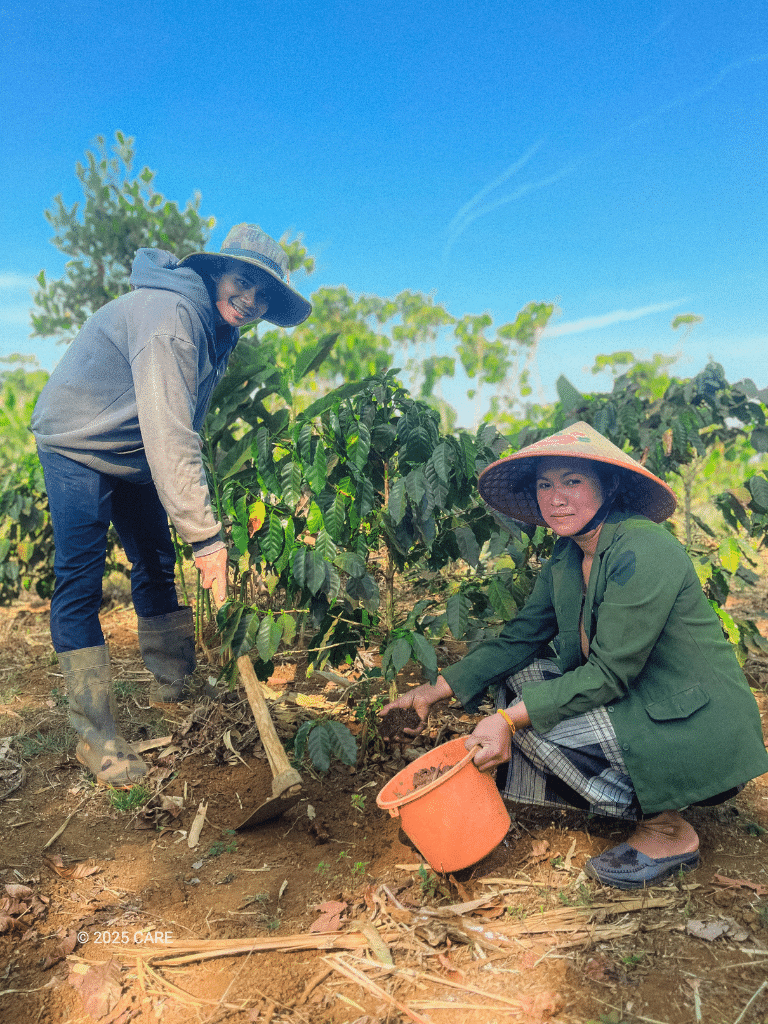
“My family relies on coffee, a vegetable garden, and chickens,” says Nat Xaypaserth, another farmer in the district. “These crops provide both income and food for our family.”
But sustaining those livelihoods is becoming harder. So farmers are learning new ways to protect them.
A cornerstone of this effort is the agro-ecology schools, not classrooms, but open-air learning spaces in the fields themselves. Here, farmers learn by doing. They experiment with composting, bio-fertilisers, and natural pest repellents. They restore soil fertility, conserve water, diversify crops, and reduce reliance on expensive chemical inputs.
“After learning how to make compost and herbal insect repellents, my soil improved, and my crops became stronger,” says Khemphet Souanemany, who took part in the training. “I’ve reduced costs and produce safer food.”
The changes are practical, immediate, and rooted in daily life.
Adaptation here is not delivered from outside. It is grown from within.
More than farming
The impact reaches beyond crops.
As women gain skills and confidence, they are stepping into leadership roles — organising savings groups, sharing knowledge with neighbors, and influencing decisions in their communities.
“Women’s leadership is crucial,” says Sonphet Phetdala, CARE Laos’ senior project officer. “When women lead adaptation, solutions are more effective and sustainable. The knowledge spreads beyond the villages, helping thousands more farmers.”
This matters not only for families, but for the environment itself.
Ethnic communities in Laos collectively manage vast forest areas. Their farming systems help protect biodiversity, regulate water, and support climate stability. Strengthening their ability to adapt helps safeguard ecosystems as well as livelihoods.
It also strengthens communities.
By opening conversations around gender roles and decision-making, the project is helping shift long-standing social norms, ensuring women’s voices are heard where it matters most.
A ripple effect
The benefits are already spreading beyond the 12 villages directly involved. Families share new techniques. Neighbors adopt new practices. Knowledge travels.
An estimated 4,000 farmers in surrounding communities are benefiting indirectly — improving harvests, protecting natural resources, and building resilience against an uncertain future.
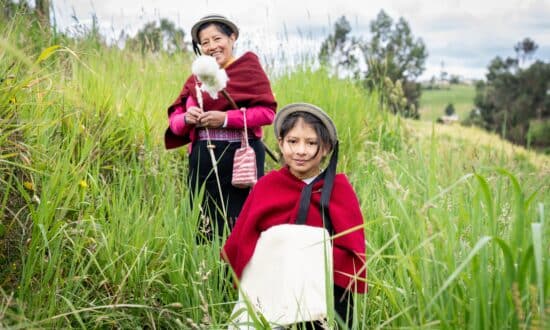
The work in Laos is part of a wider effort spanning Asia and Latin America, where women farmers are leading similar changes in Peru, Vietnam, and Ecuador. In each
place, adaptation begins the same way: by trusting local knowledge and strengthening women’s leadership.
A different future, taking root
Back in her fields, Hun Keophouhong continues tending her coffee trees.
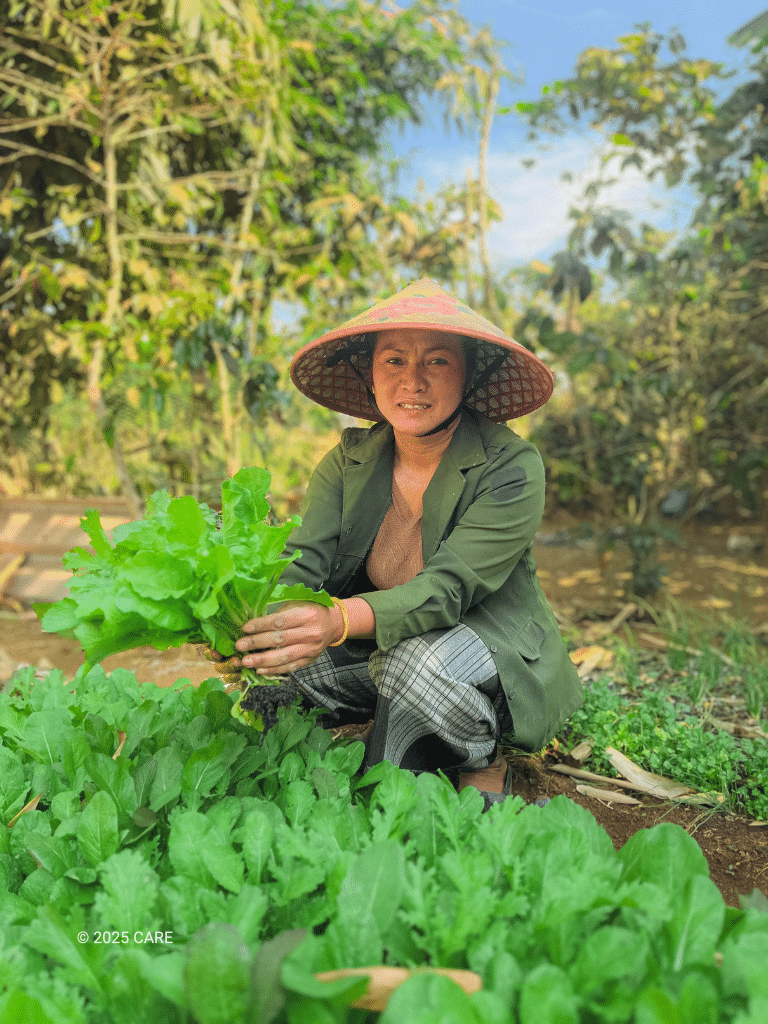
The challenges have not disappeared. The climate remains unpredictable. But something has changed. Farmers are experimenting. They are learning from each other. They are finding ways forward.
And increasingly, it is women who are leading the way.
In Lao Ngarm, climate adaptation is not being imposed from above. It is being built from the ground up — by farmers who know their land best, and who are determined to protect it.